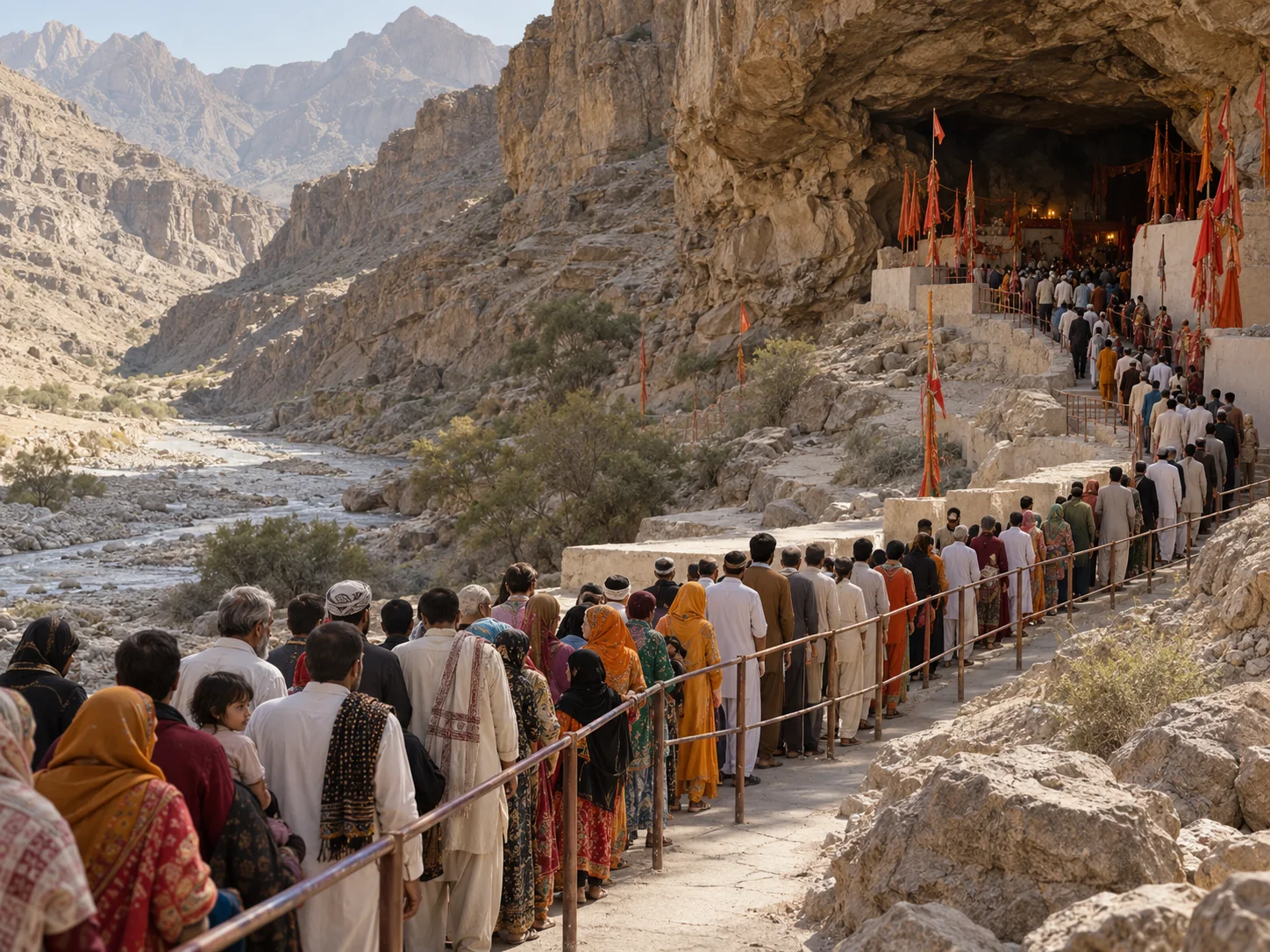
In April 2024, organisers expected more than 100,000 Hindus at the Hinglaj Yatra in Pakistan's south-western province of Balochistan. Pilgrims arrived by packed buses, continued on foot from the road to a mud volcano, and then travelled roughly forty-five kilometres farther to the Hinglaj Mata cave temple. At the shrine, worshippers jostled for position while stewards urged them to pay their respects and move on.
Parking and vehicle access were limited, so many carried children and luggage over rocky ground. The three-day gathering is described as Pakistan's largest Hindu festival, held in a Muslim-majority country. Hindus from outside Pakistan face visa and cross-border barriers to attending.
The order here was not always a single tidy line. It was a managed flow that divided a movement of 100,000 people among roads, walking stages, a confined shrine and stewards—so that a brief moment of worship could pass from one pilgrim to the next.