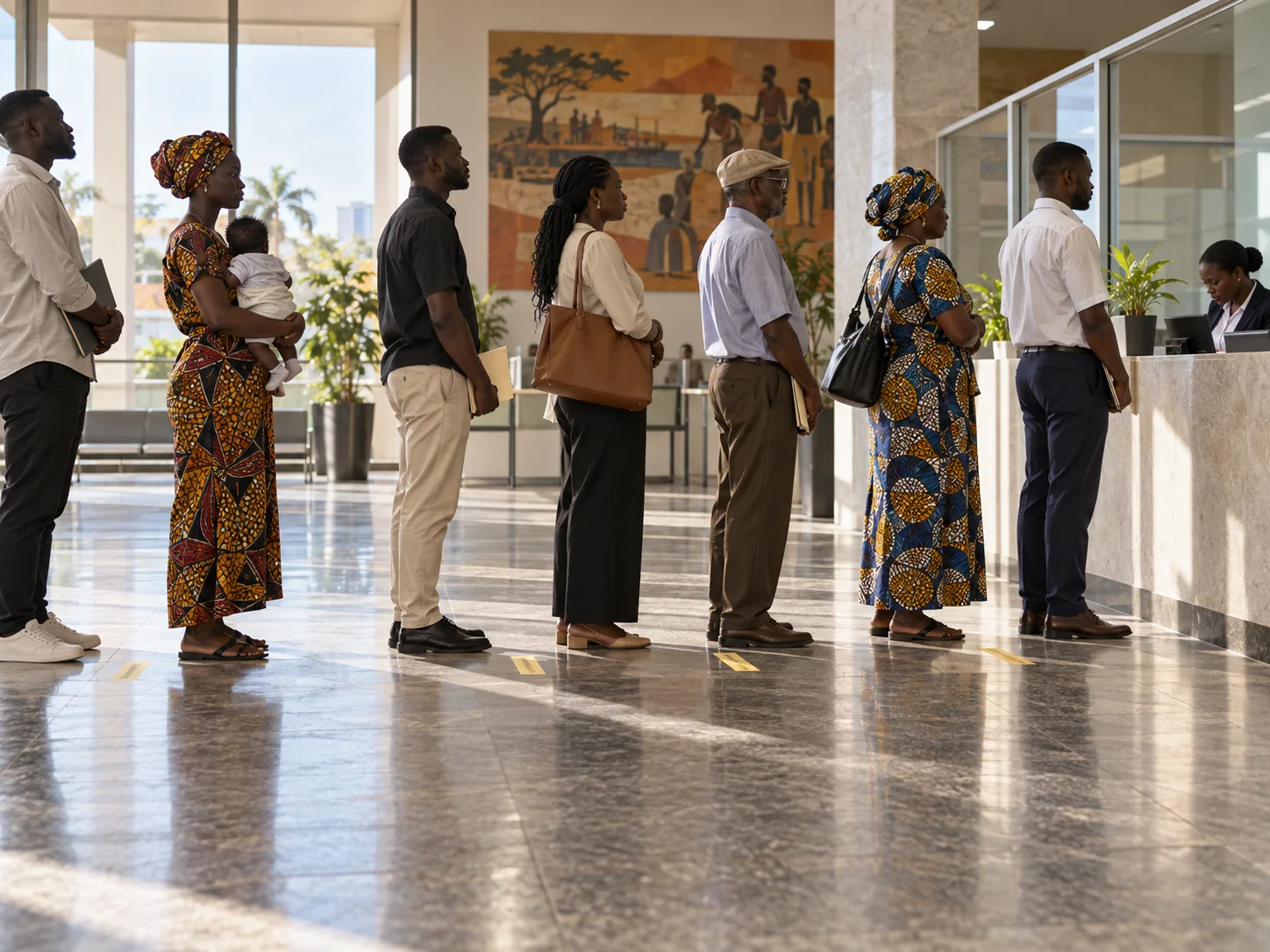
A name belongs to a person long before a government can certify it. In Angola, the legacy of a prolonged civil war has made access to birth registration and identity documents a consequential public-service issue. Registration can help a child enter school or navigate healthcare, while an identity card may become a gateway to other services in adulthood. The document does not create a person. It changes which institutions can recognize that person without further explanation.
An application may demand more than a name. Where and when was someone born? Which record establishes a family relationship? If supporting papers must be obtained elsewhere, the journey begins before anyone reaches the counter. Travel, repeated visits and uncertainty can become a hidden form of waiting. Two applicants standing side by side may have taken very different routes to the same desk.
Yet an administrative challenge is not, by itself, evidence of a physical queue. To include this case as a documented line, the atlas still needs a dated account, a location-specific photograph or an official record showing people actually waiting. That distinction matters: otherwise the people supposedly pictured in the story are inventions. With such evidence, the interesting question would not merely be how long the line was, but what recognition its members were trying to obtain. A piece of paper cannot confer humanity; it can, however, determine how easily humanity is acknowledged by a bureaucracy.