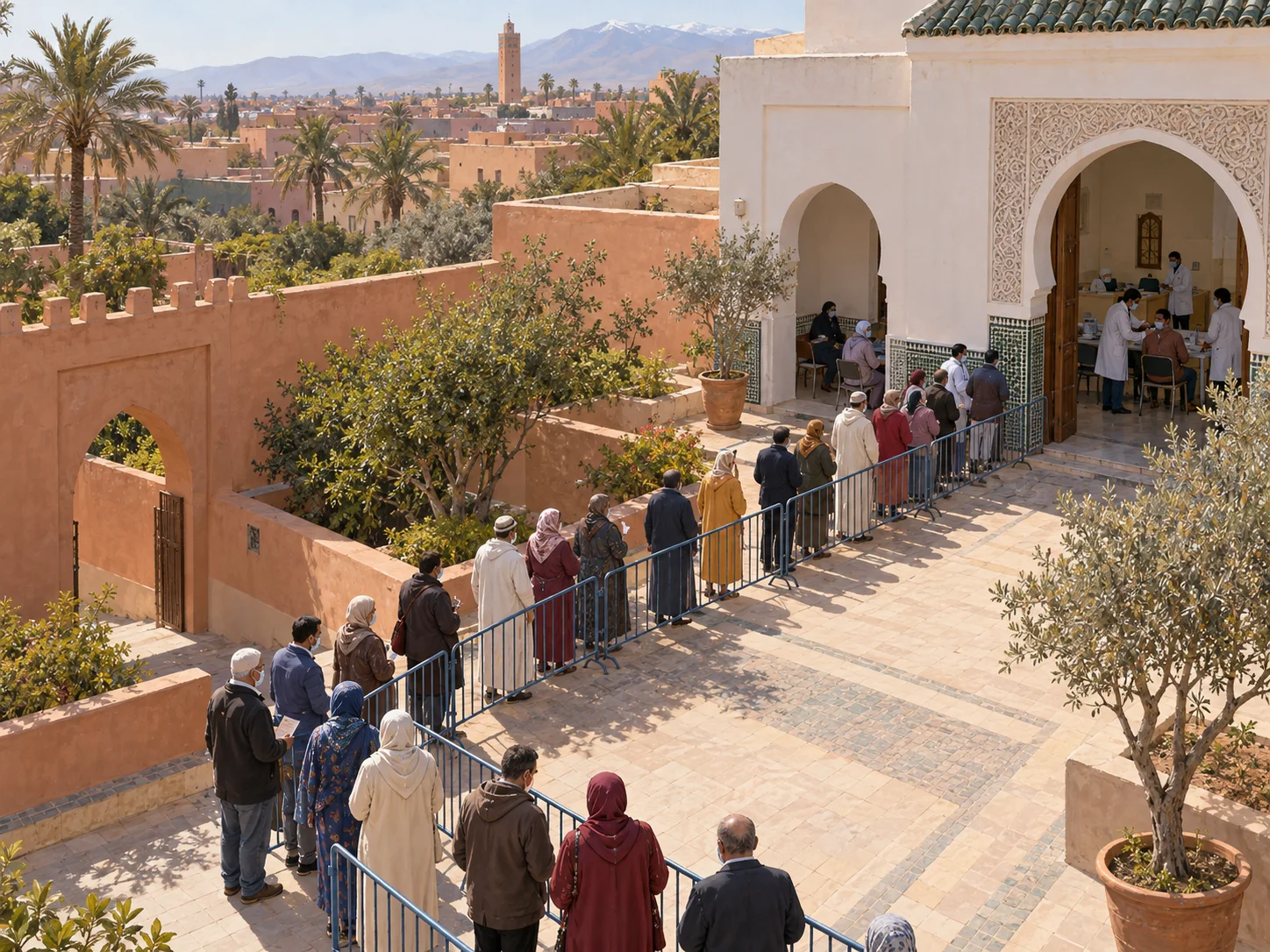
On 29 January 2021, people waited for COVID-19 vaccination in Salé, Morocco. A Reuters photograph records the queue at the start of the national campaign. The programme initially concentrated on health workers, older adults and people with chronic conditions. By mid-March, Morocco had administered about 14 doses per 100 residents. At the same time, reporting raised another question: undocumented migrants were not clearly included.
A photograph of those inside a queue cannot show everyone excluded before it begins. People with recognised eligibility could wait their turn; someone outside the registration system might never receive a place. The Salé line is evidence of one of Africa’s fastest early vaccination programmes, but speed is not equity. Before asking whether the wait was long or short, one must ask who was allowed to wait at all. That boundary—between a managed appointment and no recognised appointment—defines as much of the queue as the people visible outside the clinic.