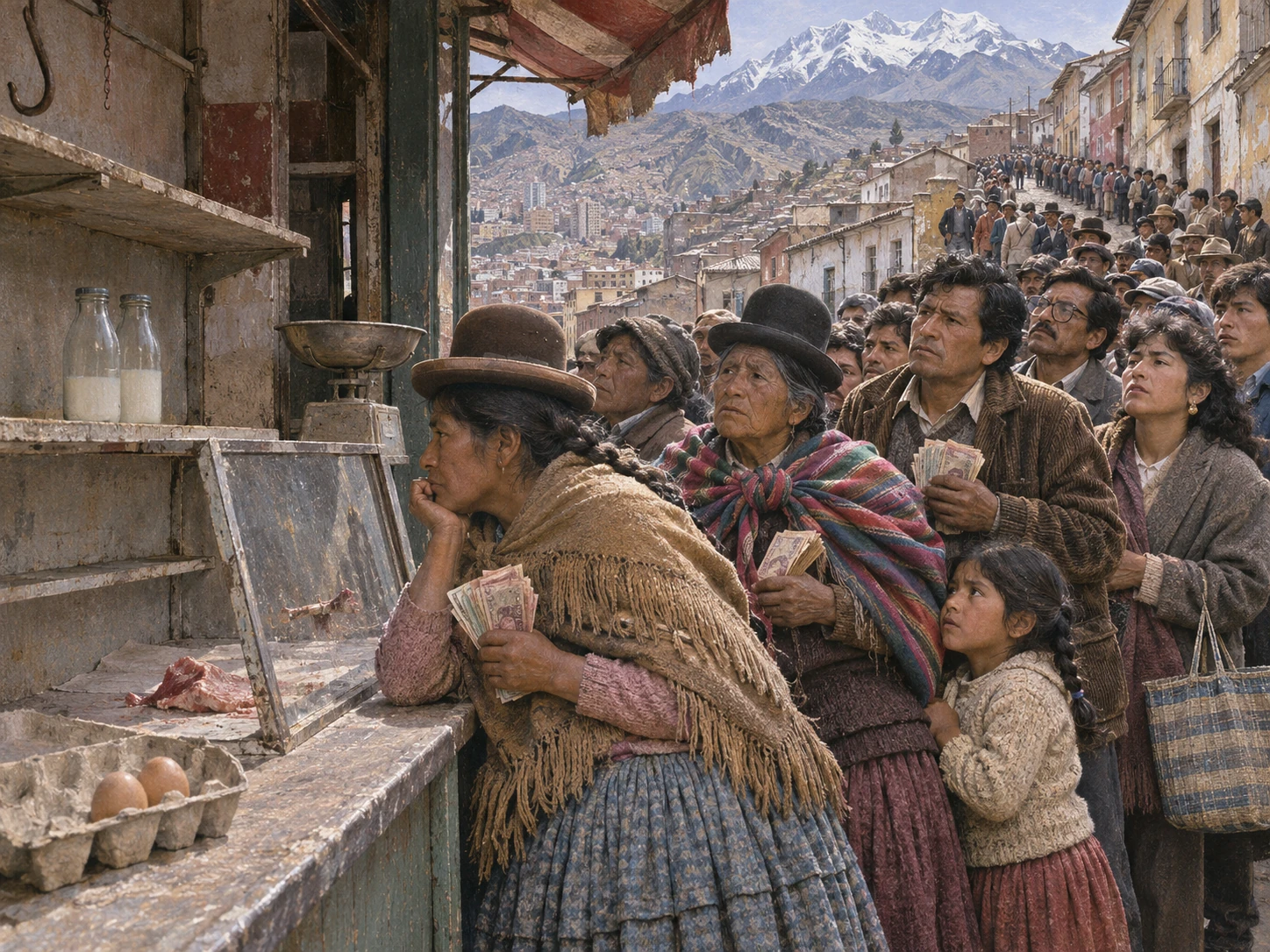
In La Paz in February 1985, lines of people seeking meat, milk and eggs spilled across the sidewalks. Contemporary reporting by The Washington Post described more than an ordinary wait for groceries. With prices spiraling, goods scarce and resellers charging premiums, converting cash into food had become a race against time.
Bolivia's hyperinflation accelerated through 1984 and 1985. An economic study by Jeffrey Sachs and colleagues calculated that prices rose by 20,000 percent between August 1984 and August 1985. A wage could lose purchasing power while its recipient was still deciding how to spend it. Sachs later recalled that people who had just been paid ran to markets to exchange soon-to-be worthless notes for physical goods.
In such a queue, a place ahead or behind could mean more than a difference of minutes. Food available to the first shoppers might not remain for those at the back, and the same notes might no longer buy the same quantity. Everyday items such as meat, milk and eggs became a clock measuring the collapse of confidence in money. Joining the line was an immediate attempt to preserve some part of a household's income.