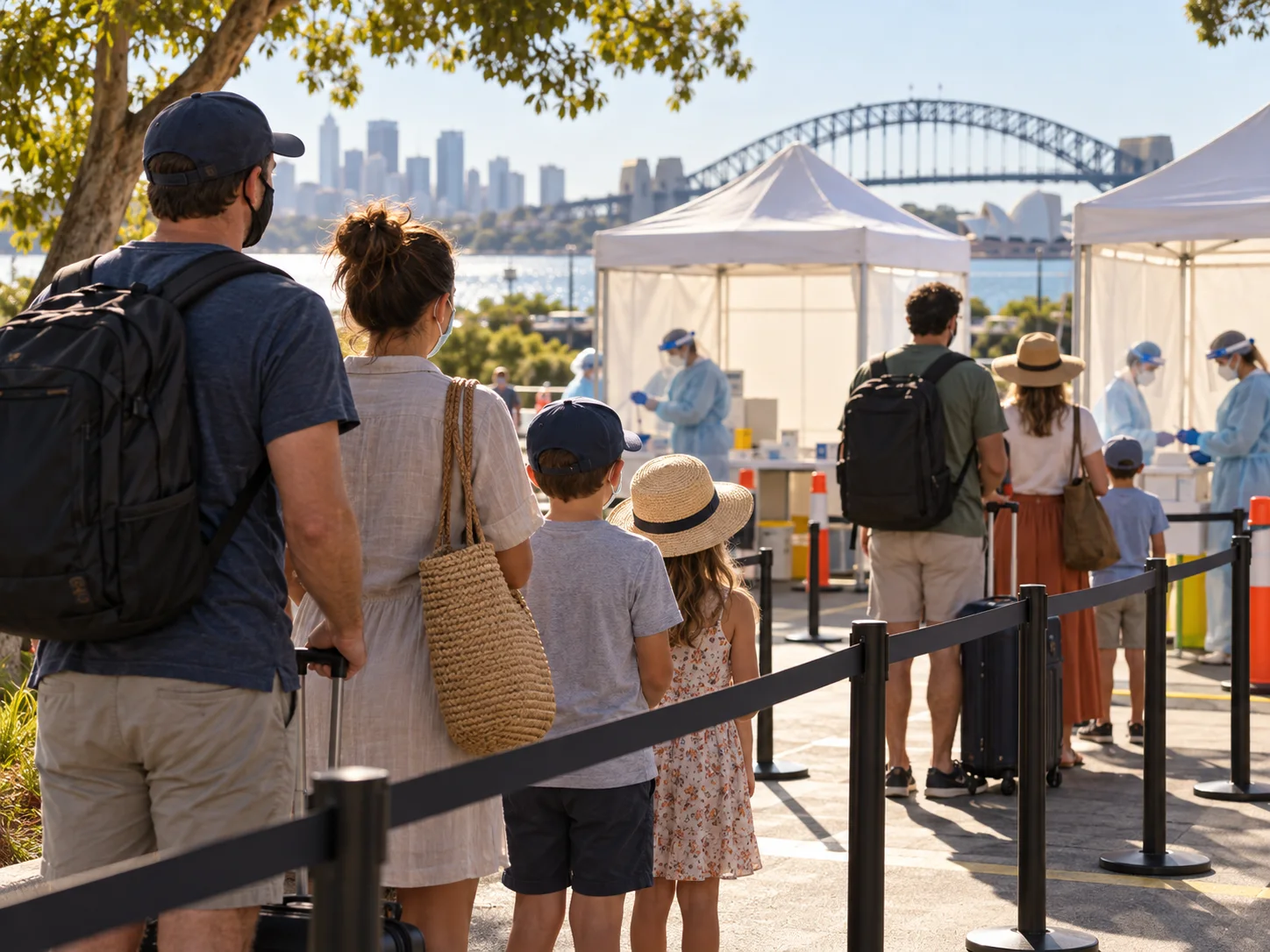
In December 2021, travellers entering Queensland from Australian hotspots needed a negative COVID-19 result within a specified pre-departure window. ABC reported long queues before Christmas, including one traveller who waited more than three hours among hundreds of people with little shade.
The test was both a medical procedure and a travel document. To see family, a person had to be swabbed, receive a result and cross the state line before the certificate became too old. Laboratory capacity, result times and a journey were compressed into one narrow timetable.
The length of a testing line was therefore not determined only by infections. It was also produced by rules about which proof was required, when and from whom. Even an internal state border turned returning home into a combination of permission and timing. People were waiting for more than a test; they were waiting for authorisation to reduce the distance between themselves and family.
In Queensland in December 2021, increased interstate travel placed testing clinics under pressure. A negative result became both medical information and a travel document, turning the testing queue into another border before the road boundary itself.