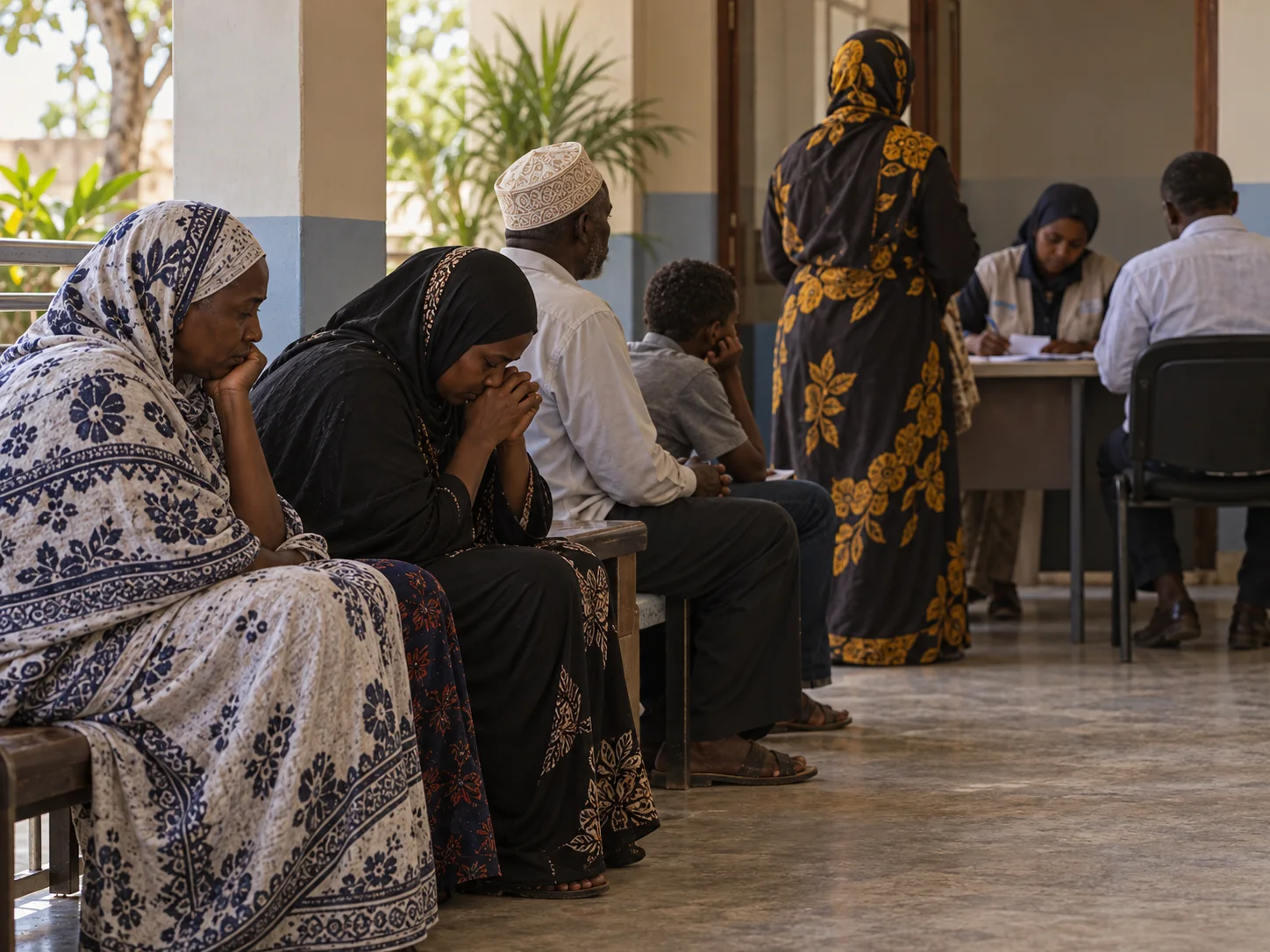
On 26 March 2024, the first bodies of victims of the Shakahola tragedy were handed to relatives in Malindi on Kenya's coast. The Kenya News Agency reported that three families connected to the first seven victims arrived from 8 a.m., then went through identity checks and counselling before government pathologists and forensic specialists released the bodies. Local reporting also documented families waiting at the hospital mortuary.
This was not an ordinary service-counter queue. Of 429 bodies, 34 had then been matched to families through DNA. Even relatives who had been contacted could not simply arrive and leave: registration, verification and psychosocial support came in sequence. One family had lost eight people and received four bodies that day.
What makes the waiting distinctive is that order served more than efficiency. Returning many remains to the correct families required a careful process designed to prevent misidentification and support the bereaved. There is nothing uplifting about making families wait after such a loss. Yet the ordered process made visible the grave administrative work of restoring individual names and family relationships after a mass tragedy.