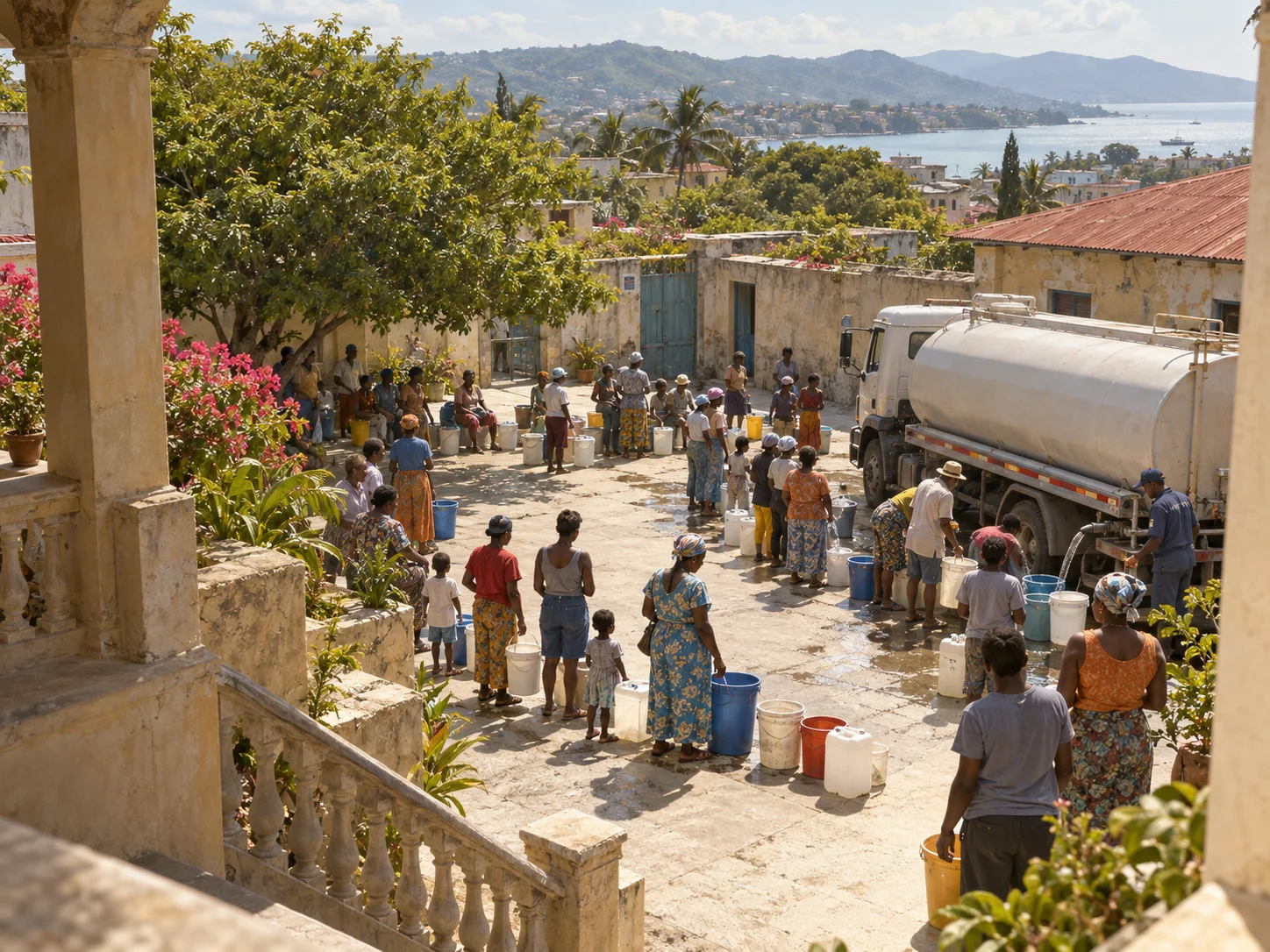
In Delmas, Haiti, the water queue began before the tanker arrived. A 2026 UNICEF photo essay records that someone could be waiting as early as 5 a.m. and would alert the neighbourhood when the truck appeared. A person did not have to stand there continuously: one bucket could hold a place. When distribution began, residents returned with four, five, or six containers, all of which could be filled.
The system served displaced families and host communities through a programme run by Haiti's water and sanitation directorate, DINEPA, and UNICEF. From May through August, more than 77,000 litres of drinking water and 264,000 litres for essential needs were delivered each day. For Jean-Guerson's family, one collection usually lasted five or six days and supplied drinking, cooking, washing, sanitation, and his daughter's preparation for school.
Using a bucket as a placeholder reduced the need to remain physically in line, but it did not remove the burden of watching for the tanker and claiming a place before dawn. Nor should orderly distribution turn displacement by armed violence into an uplifting story. The distinctive fact here is practical: before a container carried water, it carried a household's position and waiting time.