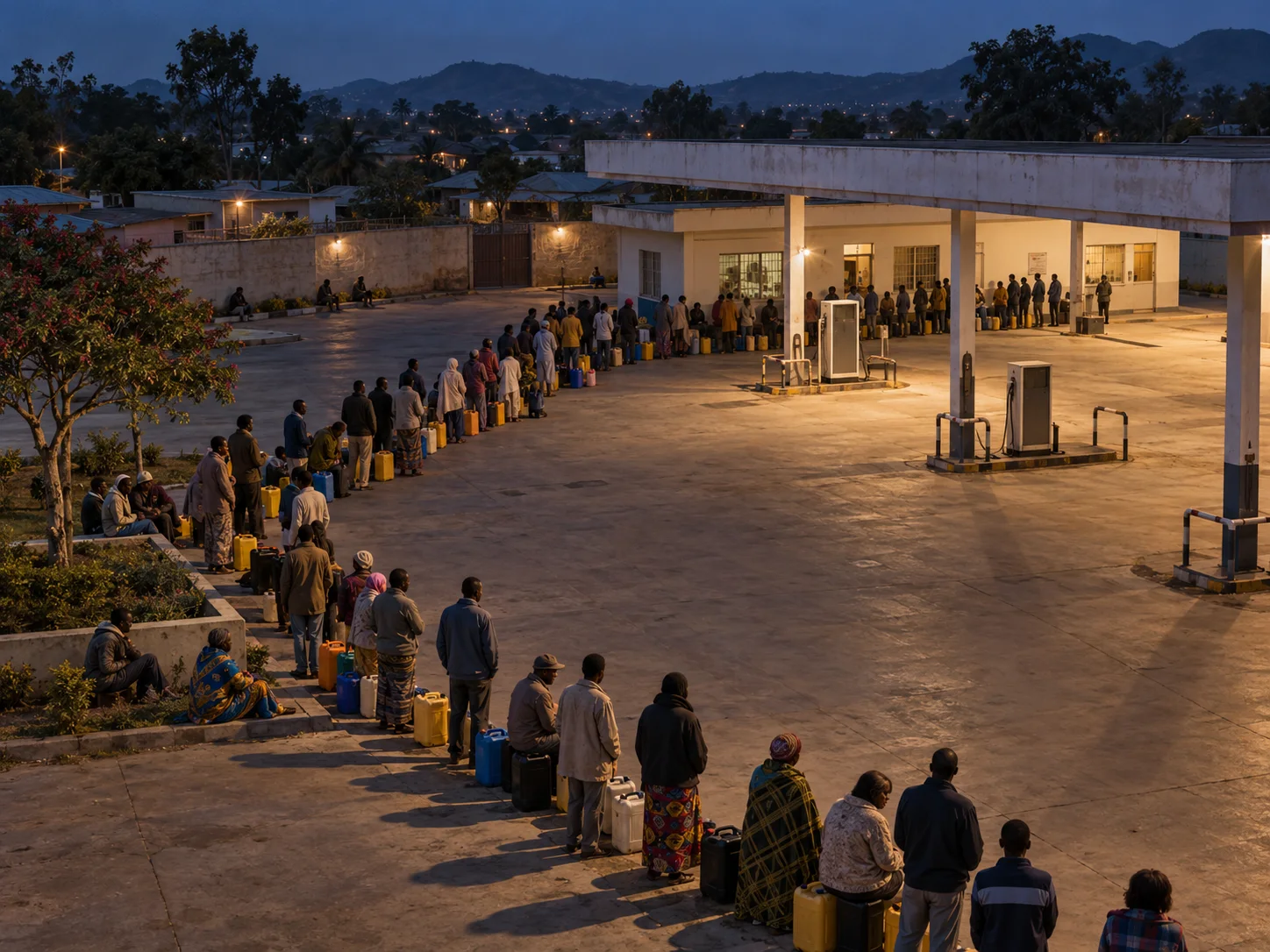
In October 2010, cars queued outside petrol stations in Lilongwe, Malawi's capital. A contemporary report by Inter Press Service included a photograph of vehicles waiting for fuel and described motorists parking overnight in the hope that a tanker would arrive. This was not an overnight queue for an exciting product launch. People needed petrol or diesel to keep ordinary life and work moving.
Shortages that had intensified from early September were affecting small businesses. Goods could not easily be transported to markets, while enterprises dependent on fuel-powered machinery struggled to operate. When a resource becomes scarce, waiting for it is not merely an inconvenience before a journey. It can be time in which work is suspended and income becomes harder to earn.
There is a peculiar contradiction in the scene. A vehicle is designed to move, yet motorists had to leave their vehicles stationary at a forecourt to preserve their place in line. An object meant to provide mobility became an immobile marker of a claim on the next delivery. Even knowing where to queue could not answer the most important question: when would fuel actually arrive?
The IPS report discussed the country's foreign-exchange problems and criticism of government spending. The source of the shortage lay far beyond any single filling station. That does not mean we know the motives of every driver pictured. Some may have depended on their vehicles for trade, others for family errands or commuting; without their testimony, those remain possibilities rather than facts.
Queues are often imagined as people inching forward. In Lilongwe, the line could remain in place through the night. To regain the ability to move tomorrow, drivers first had to stop moving today.
Even without assurance that fuel would arrive, motorists had to position their vehicles to have any chance of service. The queue at an empty pump distributed uncertainty before it distributed petrol.