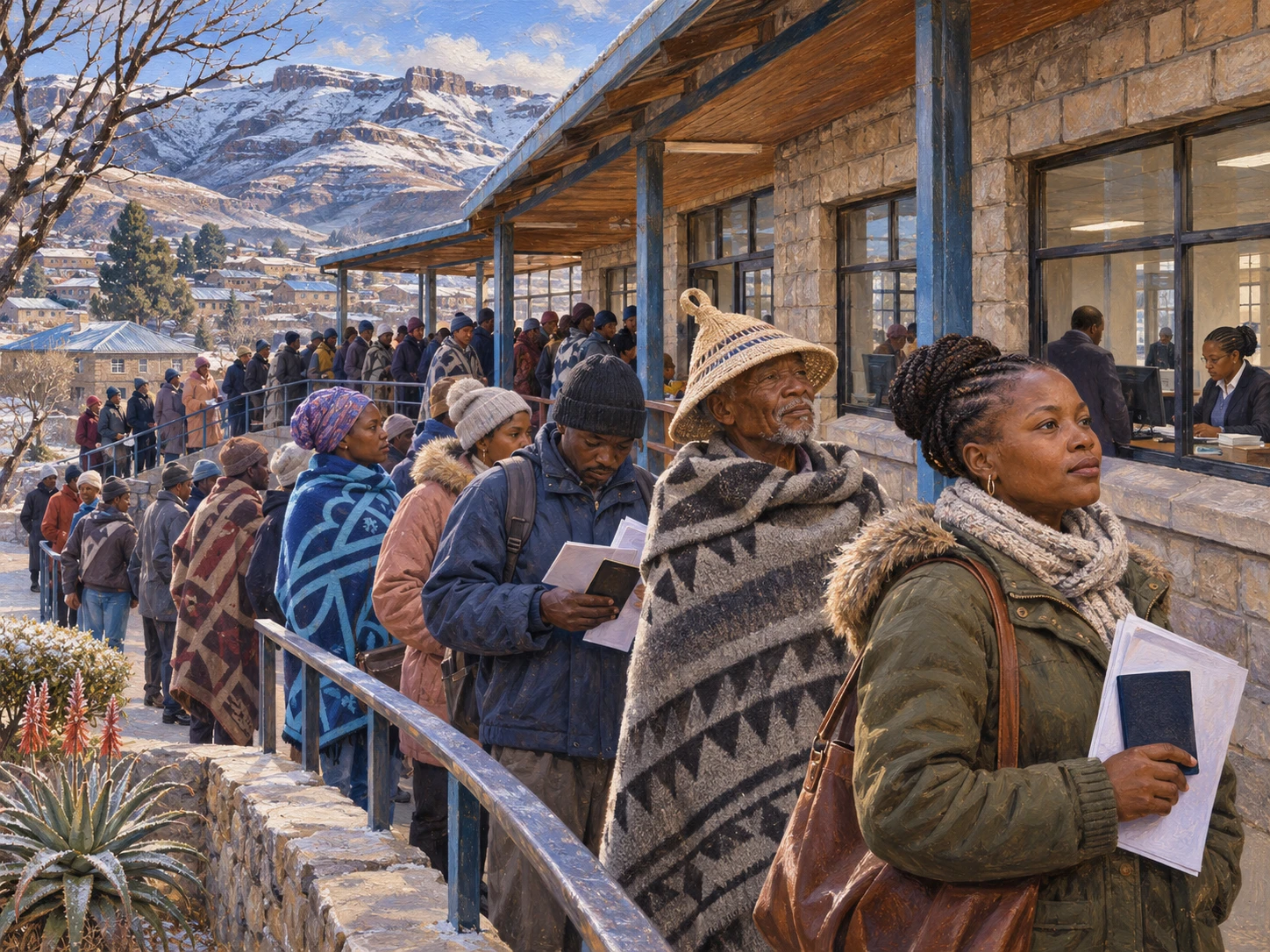
Around the 2025–26 festive season, Basotho migrant workers slept outside the passport office at Mohale’s Hoek before returning to jobs in South Africa. By 2:30 a.m., about thirty names were already on a list; some people had arrived at 7 p.m. the previous evening. Service began at 8 a.m. Applicants previously turned away because the queue was too long slept on nearby grass to avoid losing their places.
The bottleneck involved linked procedures. National identity cards introduced in 2013 had begun reaching their ten-year expiry, and applicants needed to renew an ID before seeking a passport. Even after the ID was ready, they were told to wait another 24 hours before applying for the passport. Mohale’s Hoek also produced passports distributed to Lesotho’s other nine districts.
This was more than a shortage of counter capacity. An overnight handwritten list led to an ID renewal, a 24-hour pause and then a passport application. For workers facing a return deadline, leaving the queue could mean losing the chance to cross the border legally.