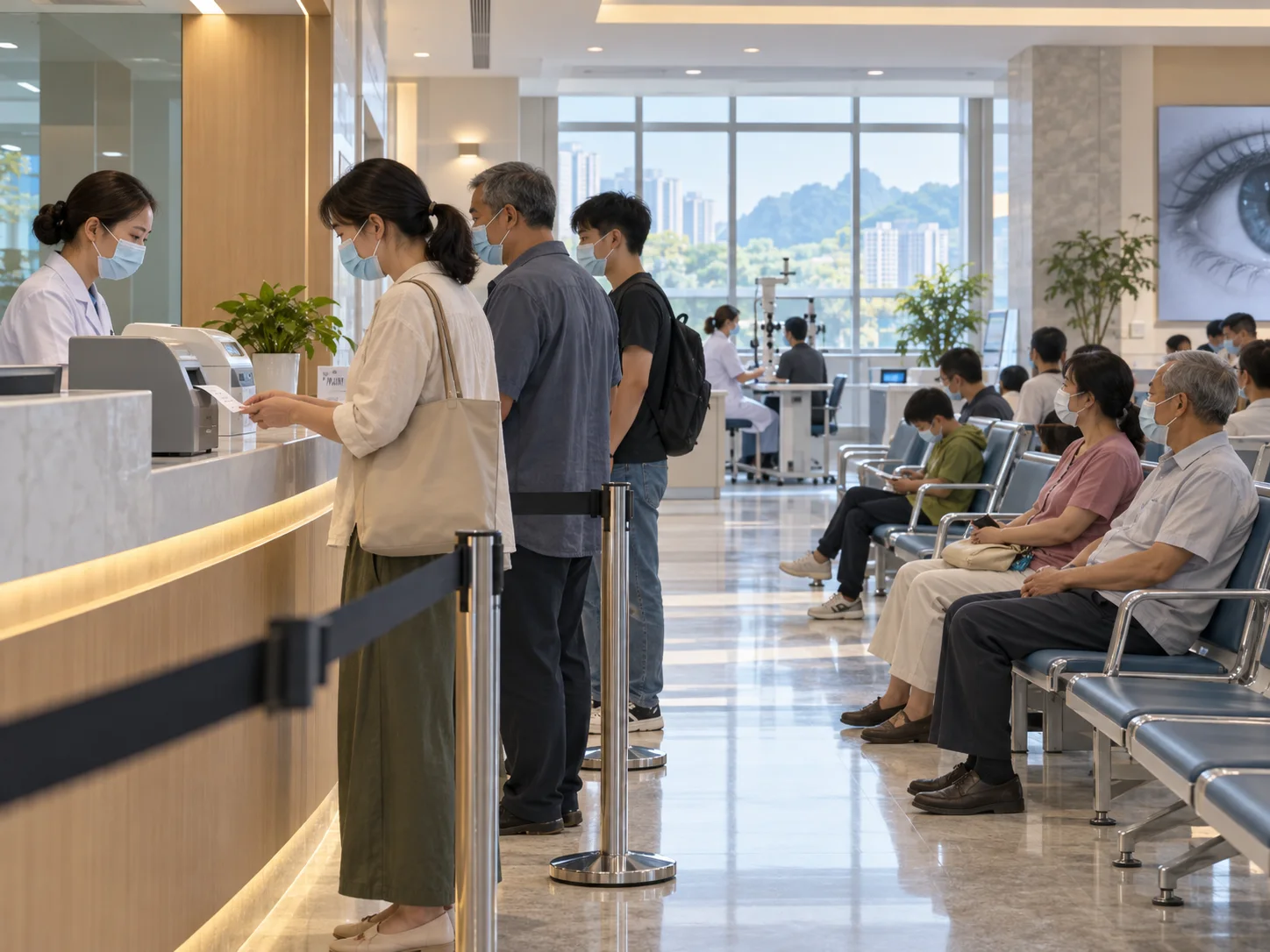
In 2020, an ophthalmology clinic in Nanning, Guangxi, instructed patients to line up to obtain a number and then wait for that number to be called. Pandemic precautions added a one-metre gap to the line, while the one-patient-per-consulting-room rule meant that entry proceeded one person at a time. The queue did not disappear at the registration desk; it changed form, from bodies at a counter to numbers in a waiting area.
A public complaint from the previous year shows what that order could feel like. A parent in Nanning reported arriving at a triage desk at 7 p.m. with a sick child and being told that the wait would continue until around midnight. Moving to another hospital shortened the line, but the consultation and tests still lasted late into the night. A numbered system can organize a crowded corridor, but it cannot by itself create more clinical time.
The small number handed out at reception translates a complicated hospital into a sequence. Patients may sit rather than remain in a standing line, yet they must keep listening so that their call is not missed. In Nanning’s outpatient clinics, the physical queue and the numbered queue alternate, each trying to make access to treatment orderly and fair. Different worlds, the same waiting.