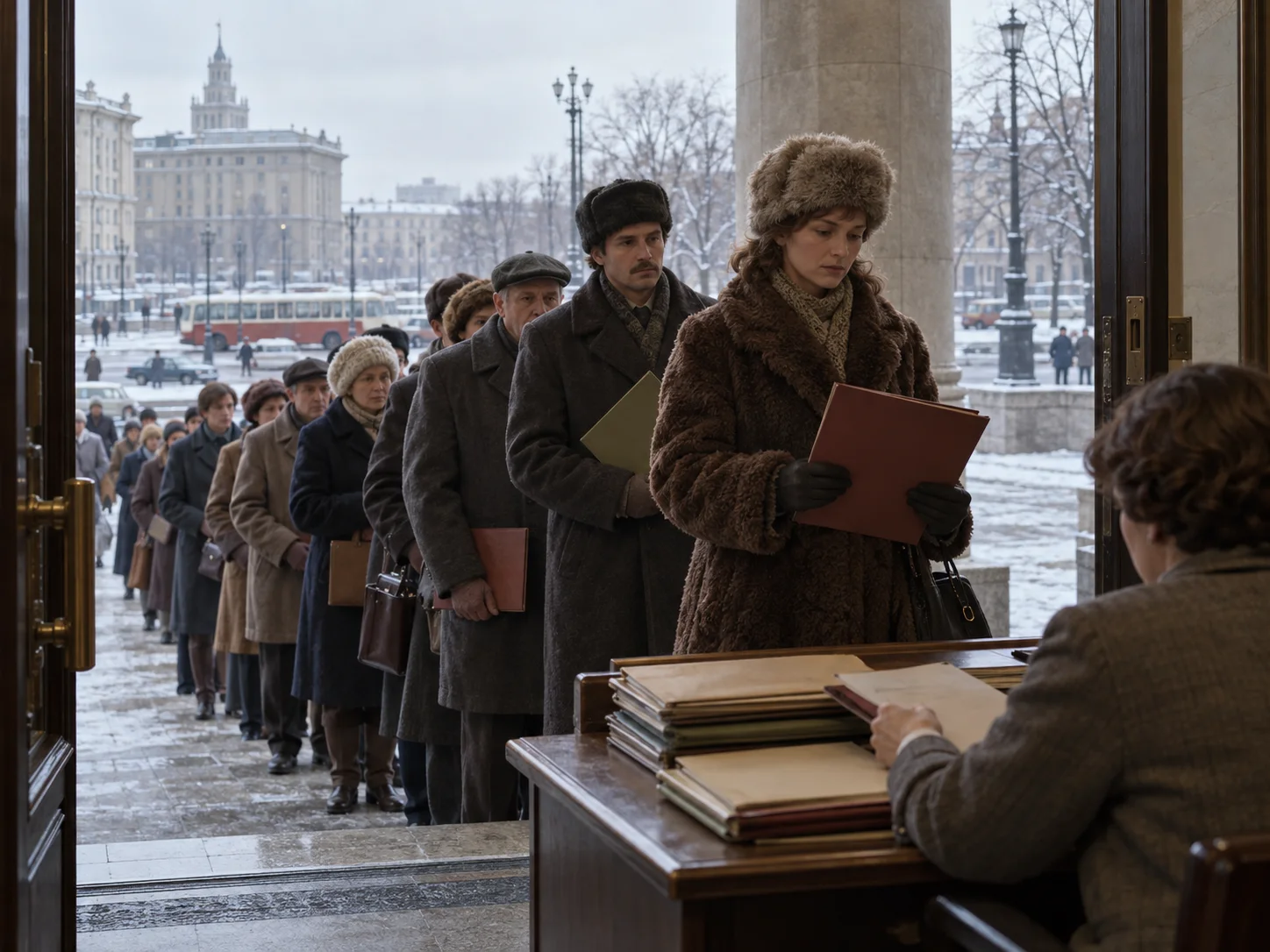
In January 1989, Warsaw's passport offices filled with crowds. Contemporary reporting by the Los Angeles Times traced the rush to a new rule: instead of applying at the local police station whenever they wanted to travel, Polish citizens would be allowed to keep their passports at home.
This was not simply a queue for a newly issued document. In a society where the state had retained the document needed to cross a border, people were lining up to take custody of it themselves. That same week, Warsaw also saw lines at offices registering small private businesses and at kiosks selling a newspaper carrying an interview with Solidarity leader Lech Wałęsa. Small policy changes produced waiting crowds at several points across the city.
What distinguishes the passport queue is that it made authority over movement visible. The time spent at the counter was also a period in which an everyday freedom was returning, step by administrative step, near the end of communist rule in Poland.