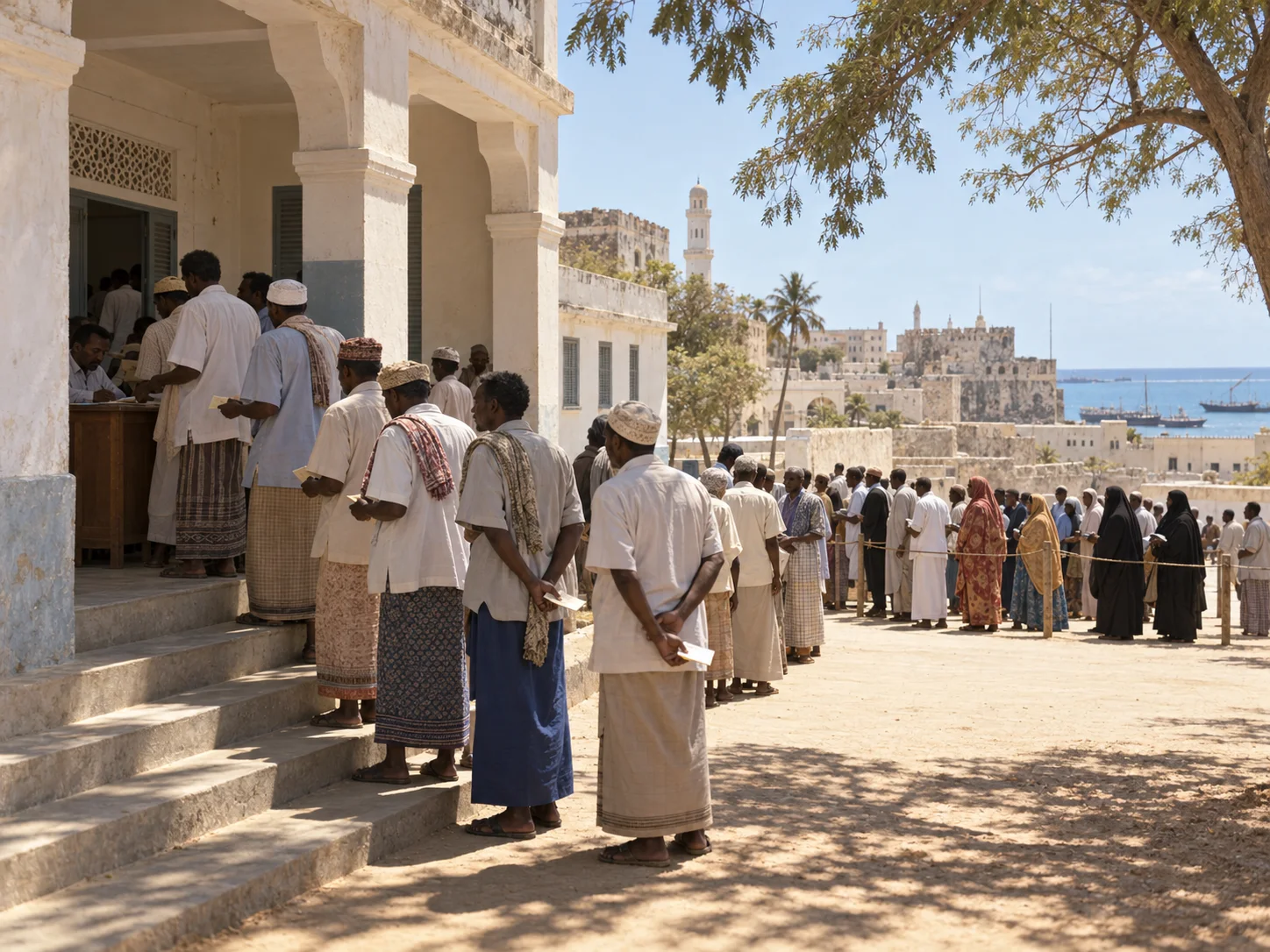
In 1977, Mecca pilgrims waited in Mogadishu, Somalia, for vaccination tickets. The World Health Organization’s caption records a stage before the injection itself. The people in the photograph were waiting for the paper that organized access to vaccination.
Pilgrimage brings many people across borders during a concentrated period. Disease control therefore becomes part of travel administration as well as personal health. A vaccination requirement can reduce the risk of carrying infection into a dense international gathering, but it also creates a chain of documentary tasks. A ticket identifies who is to be processed and turns an arriving crowd into an ordered sequence.
The WHO record does not state the number of pilgrims, the waiting time, the appearance of the ticket or where vaccination occurred after issuance. Those missing details remain unknown. The directly documented scene is narrower: Mecca-bound pilgrims in Mogadishu were waiting for vaccination tickets in 1977.
The striking feature of the queue is the contrast between its destination and its immediate object. The travellers’ eventual destination was a sacred city far away. At that moment, however, they were waiting for an administrative piece of paper. Large human movements depend not only on transport and shared purpose but also on modest checkpoints that record health procedures person by person. The pilgrimage route began, in part, at a ticket line. The ticket desk sat between medical care and permission to travel. Reaching its front did not complete the journey; it opened the next stage of vaccination and movement. The paper ticket made that next place in the medical sequence visible.