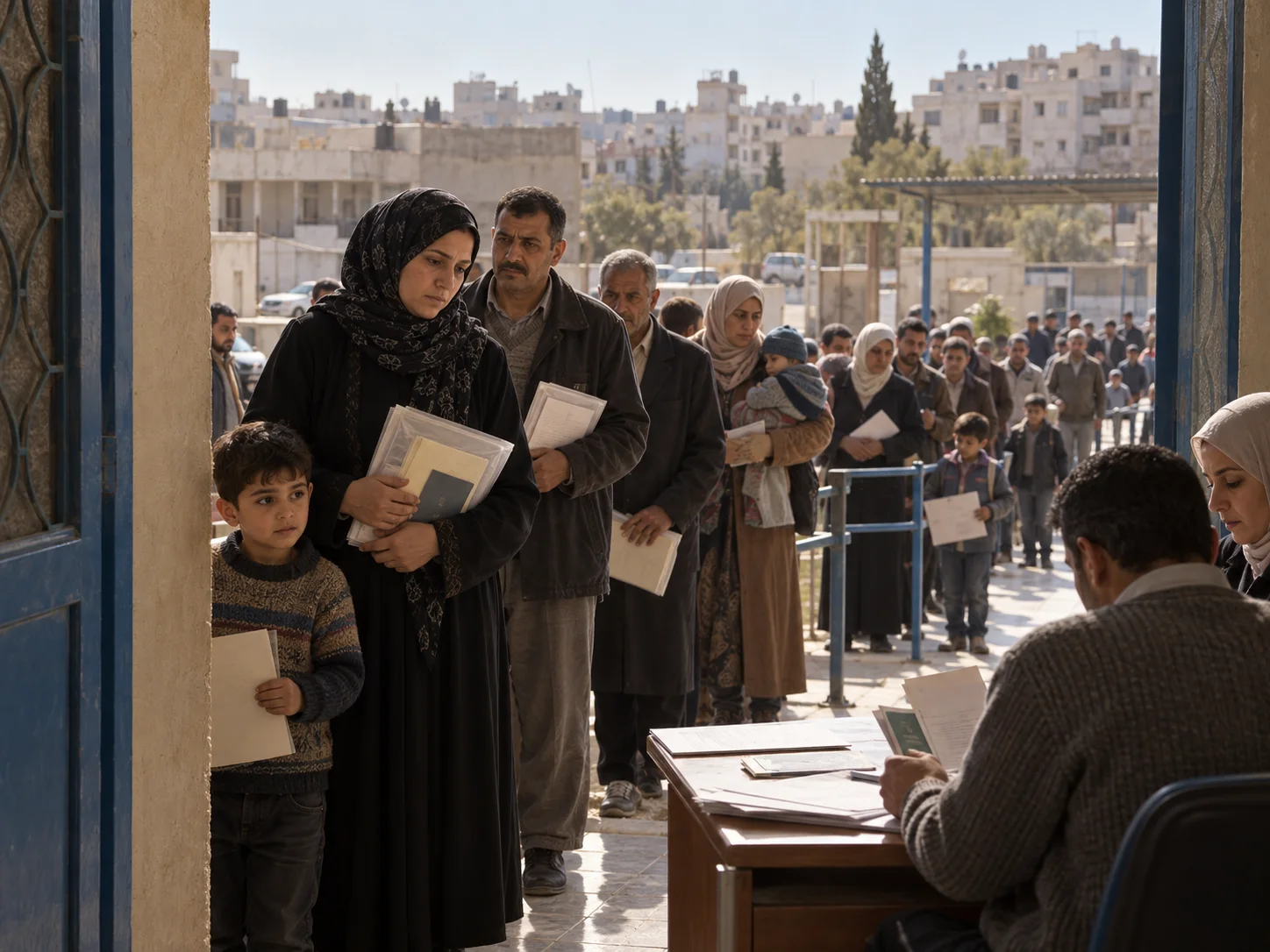
On 12 February 2007, more than 5,000 Iraqis queued outside the UN refugee agency’s office in central Damascus. UNHCR’s contemporary report, accompanied by a photograph of the crowd, says that people had begun lining up on Saturday night. This was not simply an overloaded reception desk. Fear had spread that Syrian immigration rules might lead to deportation, making registration with UNHCR a practical way to establish a claim to protection. The agency estimated that as many as one million displaced Iraqis were then in Syria. António Guterres, the UN High Commissioner for Refugees, had just completed a visit to Damascus, where he heard Iraqi concerns and received assurances from the Syrian government that Iraqis would not be forced back across the border. Yet a general assurance did not remove the need for individuals to secure appointments and enter the registration system. UNHCR’s caption describes thousands outside the building arranging those appointments. The queue therefore marked the narrow point at which a regional displacement crisis became an individual administrative case. Its scale is memorable, but its meaning lies in why people came: a numbered turn at an office could help place documentary distance between a displaced family and the possibility of return. The report’s timing matters: the line began on Saturday night, not merely when the office opened on Monday. People had committed a weekend to securing access to the registration process. That duration turns the reported fear of deportation into a documented pattern of action rather than an inferred emotion.
Syria · 2007
Five Thousand People Outside One UNHCR Office