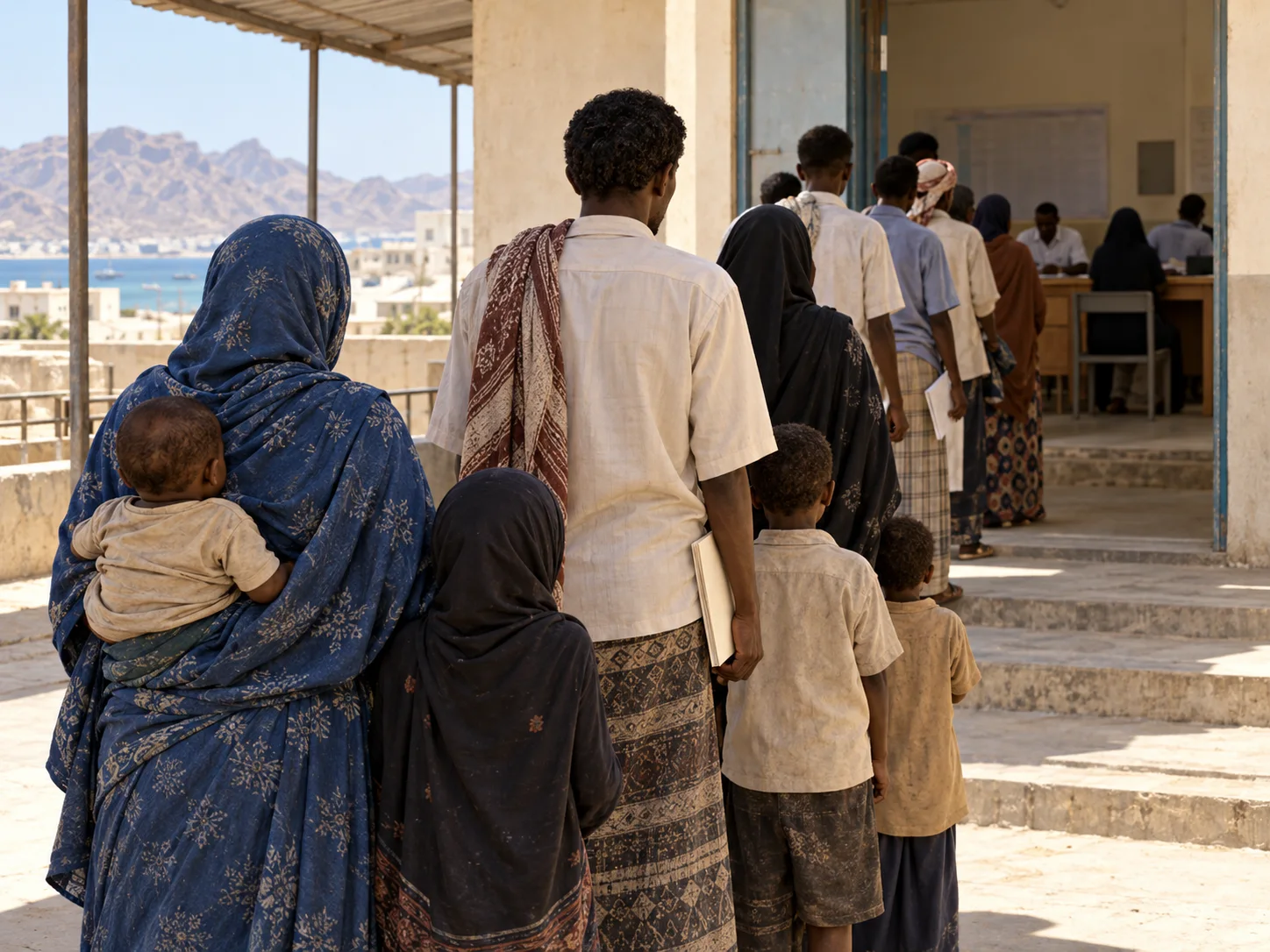
For two months from late 2005, Somali refugees gathered soon after dawn outside Yemen’s immigration ministry in Sanaa to obtain new identity cards. UNHCR’s contemporary report describes men waiting on one side of the gate and families on the other, presenting old cards and birth certificates. The first phase registered or re-registered 16,758 people. Electronic records captured birthplaces, arrival dates, ethnicity, work skills, education and special needs; webcams and colour printers produced photo IDs, while Somali community elders helped verify identity. Successful applicants received cards valid for two years, signed by UNHCR and the Yemeni government, on the same day. The documents supported movement inside Yemen and access to health care and education, though they were not international travel papers. For refugees who had crossed the Gulf of Aden, the end of the line was a document usable in daily life. For the authorities, the same queue was an entry point into counting and planning for an urban population that was otherwise difficult to trace.
Yemen · 2000 (period details in article)
Two Lines at Dawn for Refugee Registration in Sanaa