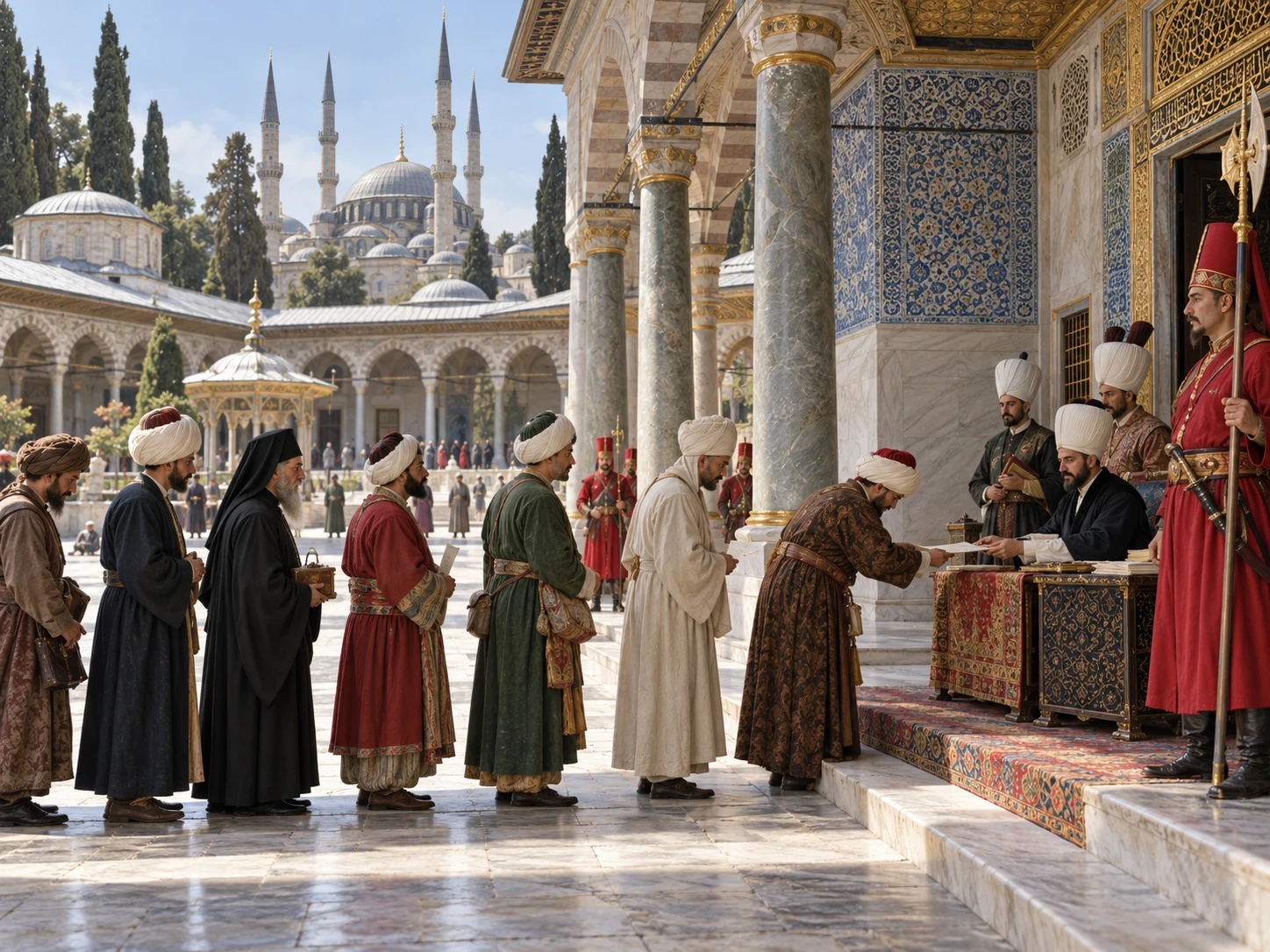
In seventeenth-century Istanbul, Topkapı Palace was not only the centre of empire; it was also a place where subjects tried to make grievances heard. The palace's first courtyard was broadly accessible, and a scholarly account describes people waiting there to present petitions to scribes, who forwarded the documents to the appropriate imperial offices. A separate social history records that, by 1693, hundreds of petitions were handed to the sultan at each meeting of the imperial council. There were no numbered tickets or modern queue barriers. Yet the route from entrance to courtyard, from petitioner to scribe, and onward to the council created an order for approaching power. A petition was more than paper. For many people it was one of the few ways to report injustice or hardship to a distant ruler. Waiting in the palace courtyard therefore held both hope that one's turn would come and uncertainty that the complaint would be heard. The institution and landscape were Ottoman, but the feeling is familiar across time: waiting for a request to pass through the window of authority.
Ottoman Empire — Istanbul · 17th century
Waiting to Hand Over a Petition: The Ottoman Palace Courtyard in the Seventeenth Century