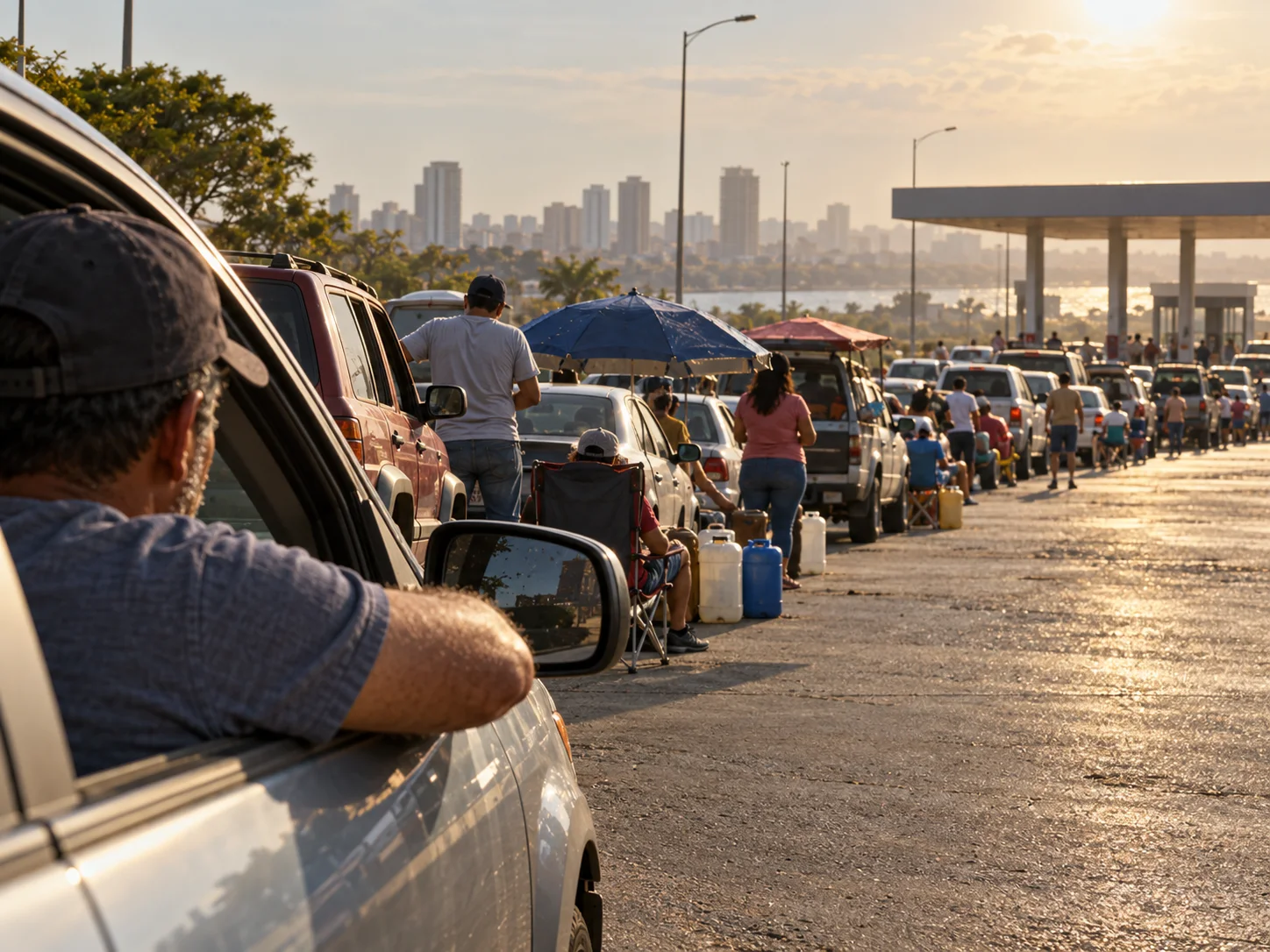
On 21 August 2020, thousands of vehicles remained in lines across Maracaibo and the neighboring municipality of San Francisco in western Venezuela. A Reuters-distributed photo record reported that people had waited as long as five days for gasoline. A dual system of subsidized and international prices introduced in June had not ended the shortage or the lines.
The paradox of waiting for fuel in an oil-producing country separates underground resources from the refining and distribution systems needed to put gasoline into a car. In 2020, refinery stoppages, missing parts and import constraints converged. A vehicle became a placeholder before it could become transportation, and days spent protecting a position in line consumed time otherwise needed for work, care and travel.
Price alone did not determine the wait. Uncertainty over whether a station would open or another tanker would arrive lengthened the order. The distance between the image of an oil nation and daily life beside an empty pump became visible in the length of the vehicle queue.