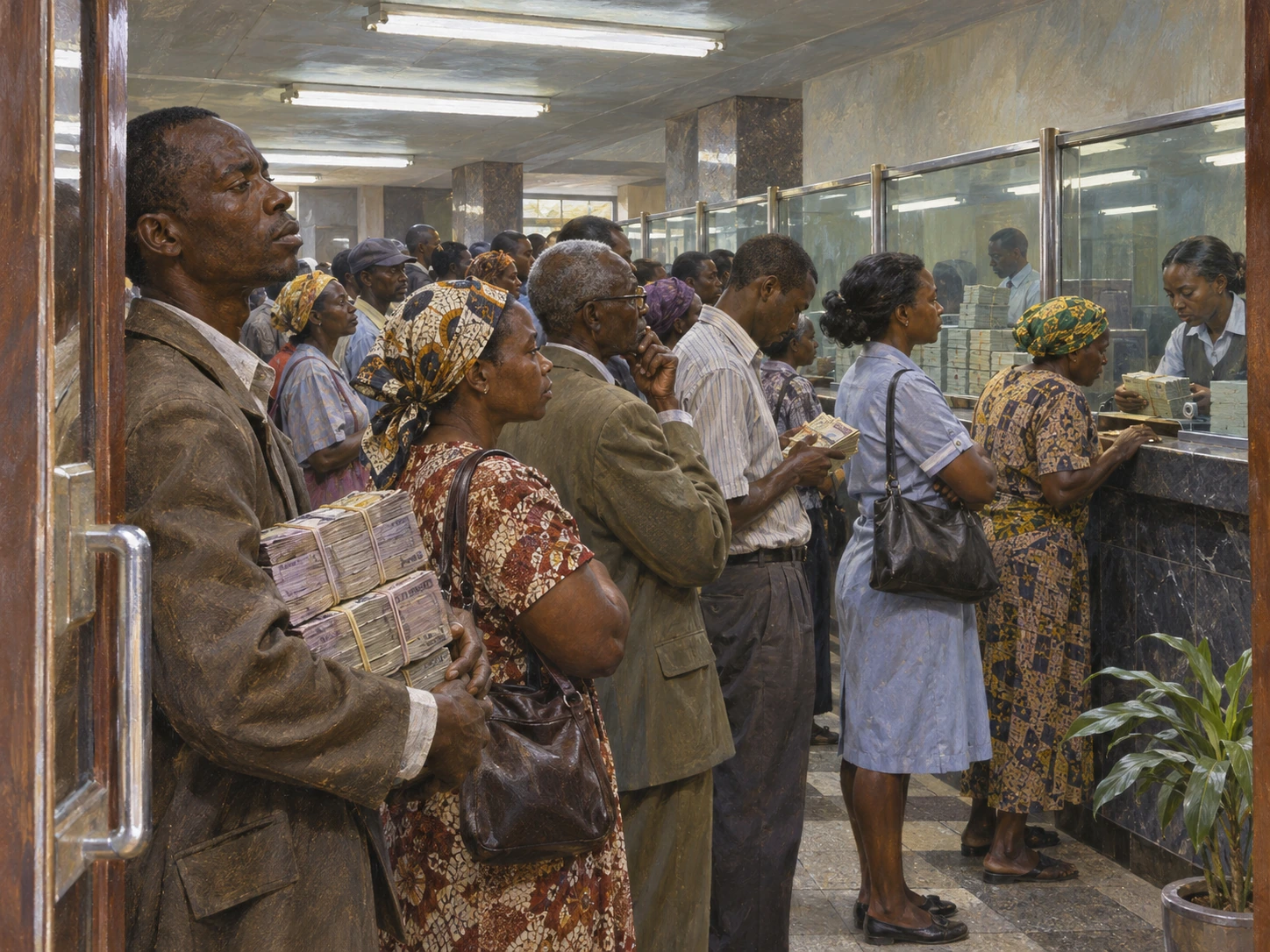
On 1 April 2008, people queued at a cash machine in Harare, Zimbabwe's capital, to withdraw money. The Reuters photograph caption identifies the date, place and purpose directly. Reuters reporting from January of the same year also described long queues of residents seeking withdrawals after newly issued high-denomination notes failed to end the country's shortage of cash.
Under hyperinflation, banknotes could lose purchasing power while people were still waiting for them. A balance in an account was of little use for daily shopping if cash had not reached the ATM or counter. Larger notes reduced the number of pieces of paper needed for a transaction, but they did not by themselves solve either the scarcity of cash or rapidly rising prices.
This was more than routine congestion at a bank. It was an ordered wait to turn one's own account balance into physical money—and then return that money to everyday life while it could still buy something. People spent time waiting for cash even as time eroded the cash's value.