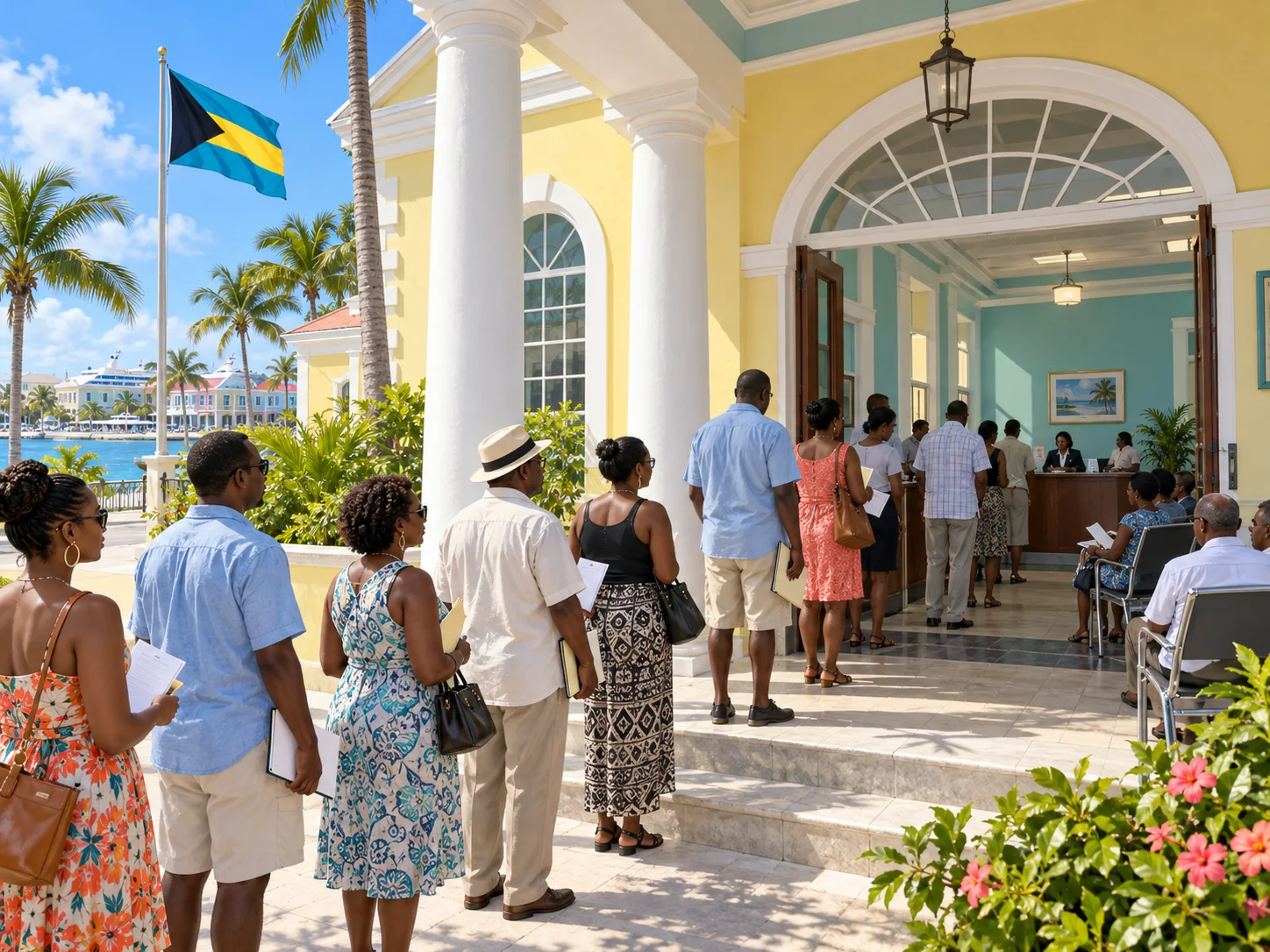
In June 2014, passport applicants waited for hours outside the Thompson Boulevard Passport Office in Nassau. When the Tribune arrived around noon, about 50 people were gathered under a plastic tent, while others had no shade. There was no organized line and no numbering system. When a security officer opened the door, sometimes only two or three people were admitted.
Perry Johnson was making a second attempt to submit an application for his one-month-old daughter’s first passport. He said he could not force his way forward while carrying the infant. Another applicant who arrived at 9 a.m. described people who came later getting inside first. The burden was not only the duration of the wait. It was the absence of a recognized rule for determining who should be next.
The government attributed the pressure to a combination of replacing handwritten passports with electronic passports and the summer travel rush. The advised processing time had increased from four weeks to six. Officials planned to bring in staff from elsewhere in the public service and introduce two shifts. A separate procedure remained available for genuine emergencies such as urgent medical travel.
The crucial missing object in this queue was a number. A numbered ticket can preserve a person’s place even when the body leaves the line. Without one, applicants had to remain outside and defend their position whenever the door opened. Before the office could issue travel documents, it lacked a reliable system for issuing order itself. The outdoor queue was separate from the later processing wait of several weeks. One passport therefore contained two kinds of delay: time spent bodily present and time spent as paperwork inside the system.