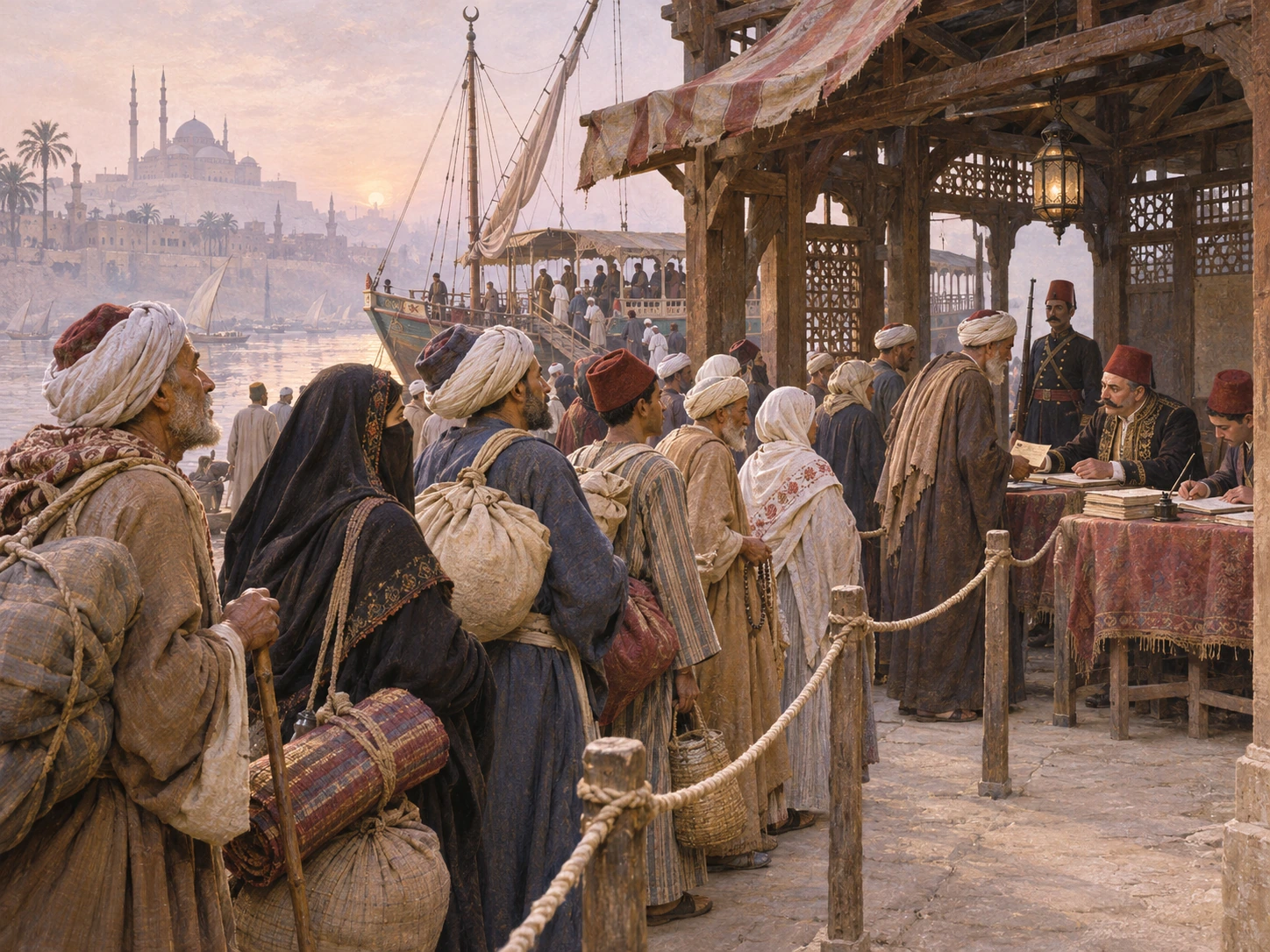
An account published in 1885 described a pilgrimage ship taking on 400 Mecca-bound passengers at Port Said and another 150 at Suez. The vessel already appeared full, yet boat after boat came alongside and people were pressed onto the deck. This was not a neat single file on a pier, but a sequence of small craft, boarding points and a growing mass waiting for space aboard.
Steamships and the opening of the Suez Canal in 1869 shortened the sea pilgrimage and enabled many more people to travel. Cheap pilgrim transport also compressed personal space and made water, sanitation and disease control urgent concerns. After cholera outbreaks, quarantine observation added further waiting at ports and stations.