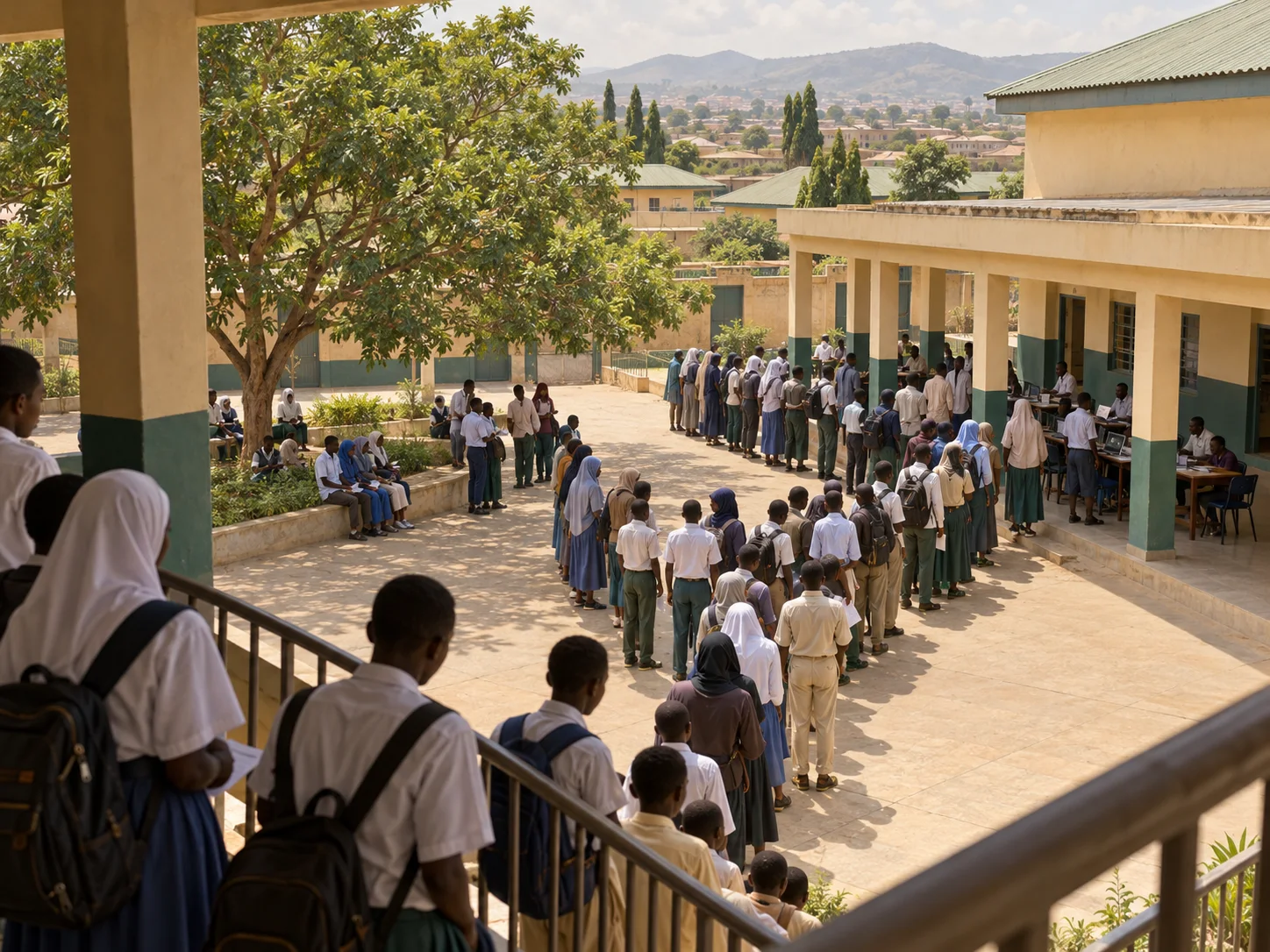
On 15 January 2026, schoolchildren queued for National Identification Number enrolment at the NIMC headquarters in Kwara State, Nigeria. One fourteen-year-old arrived at 6:30 a.m. to collect numbers; the children she accompanied left at about 2 p.m.
Another parent and two children waited from 9 a.m. until 4 p.m. with number 97. The hall contained around thirty registration cubicles, but only four were operating during the visit. Because schools and registration offices open during the same weekday hours, enrolment required missing class.
The entrance to digital government was not itself digital. To obtain an identifier increasingly needed for examinations and scholarships, students exchanged a day in the classroom for a paper number and a place in line.