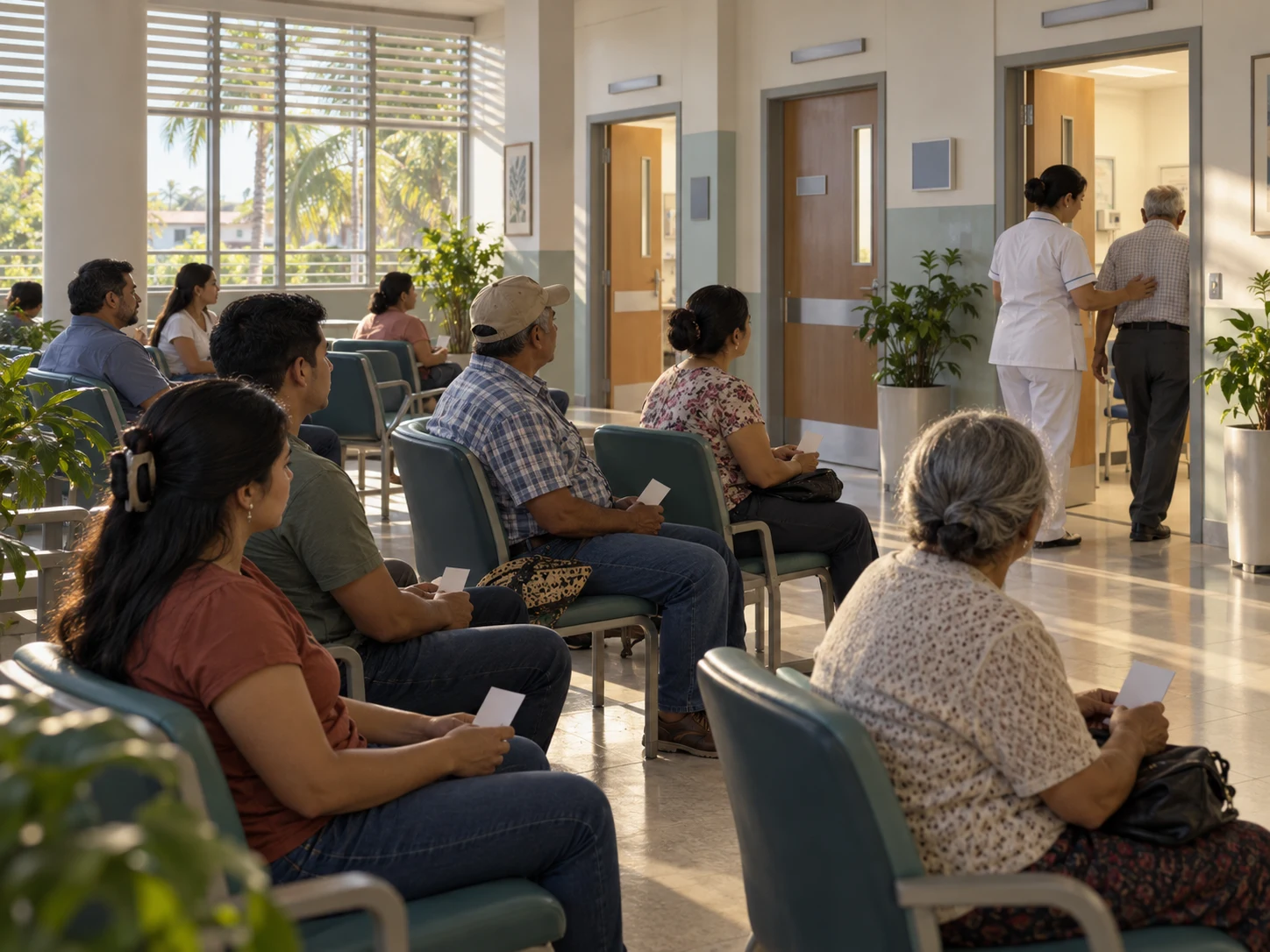
In Paraguay’s Social Security Institute, IPS, early-morning competition for public medical appointments has long been a practical problem. IPS guidance shows in-person eligibility windows opening from 6 a.m., alongside telephone, web and mobile-app booking. It also lists specific times—8 a.m., 11 a.m., 3 p.m. and 6 p.m.—when unused appointments could be reassigned.
A paper ticket distributes limited consultations in sequence, but advantages people able to reach a clinic before dawn. Adding channels can shorten the visible line while creating new competition for telephone connections, internet access and precise reassignment times. Waiting does not disappear; it is divided among windows, calls and screens.
Fair-looking order is not the only issue in health care. Illness severity, paid work, caring duties and distance all shape the cost of waiting. Multiple booking routes therefore represented more than a technical change. They altered which part of the day, and which kind of access, patients had to surrender in order to obtain care.
Multiple booking channels weakened a system that favoured people able to queue before dawn. The change mattered not because the visible line looked shorter, but because obtaining an appointment no longer required surrendering the start of a day.