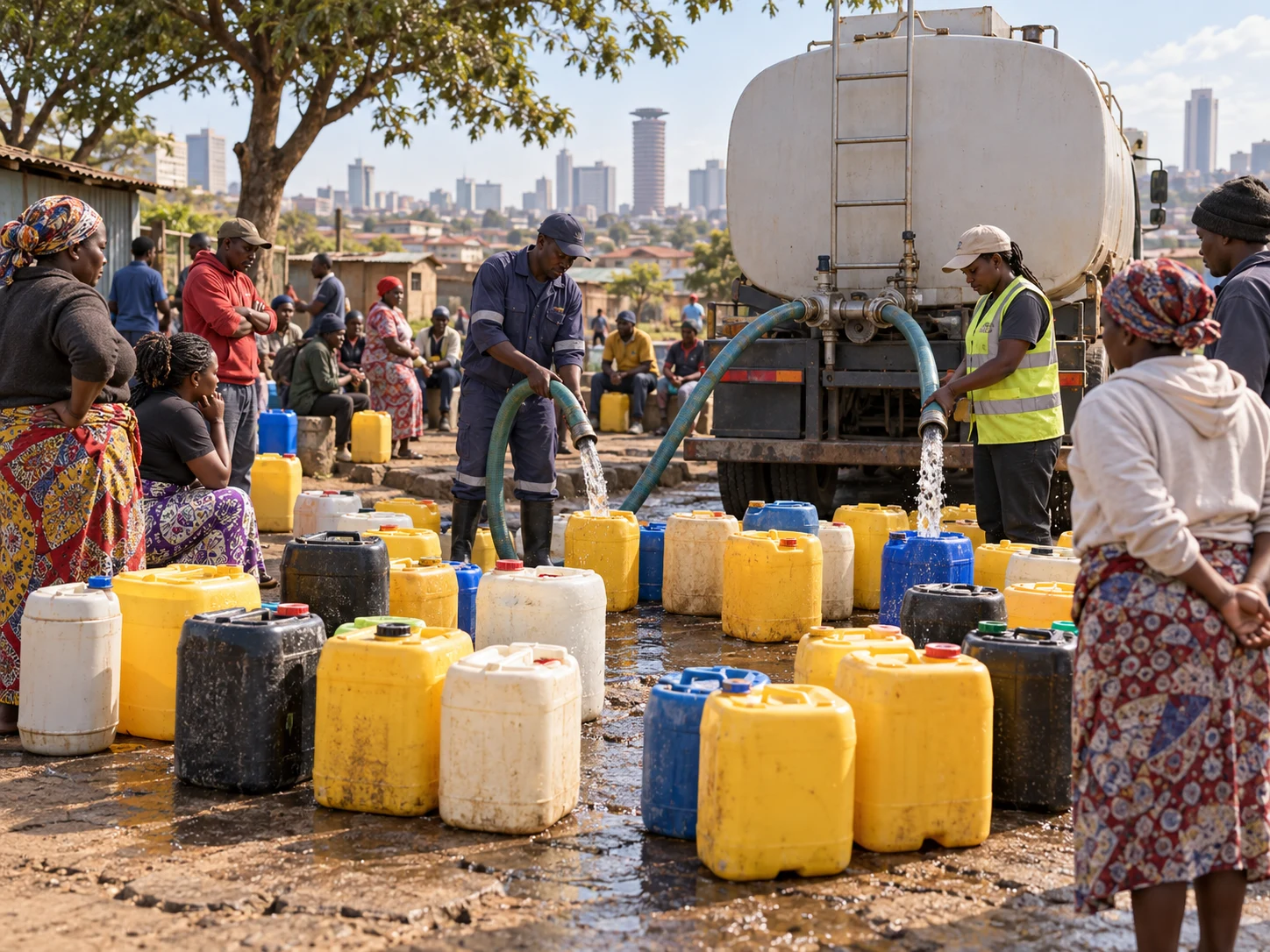
In July 2020, family jerrycans formed a line on a road in Kibera, Nairobi, before a water tanker began serving residents. The containers were placed one metre apart inside spaces marked in white chalk, with women and children waiting behind them for free water. During the COVID-19 pandemic, this arrangement made the order visible while keeping people apart.
Many Kibera households lacked reliable water, and buying it consumed a meaningful share of household income. Deliveries organised by the community group SHOFCO and its supporters did more than satisfy thirst: they left scarce cash available for other needs. Yet water was so urgent that an attendant sometimes had to restore order and break up disputes in the queue.
Here, the first things to take their places were not bodies but named yellow containers. Setting them out in order marked both a family's claim and the distance required for public health. The water queue revealed not only a gap in urban infrastructure, but also residents' practical way of producing fairness amid disruption.