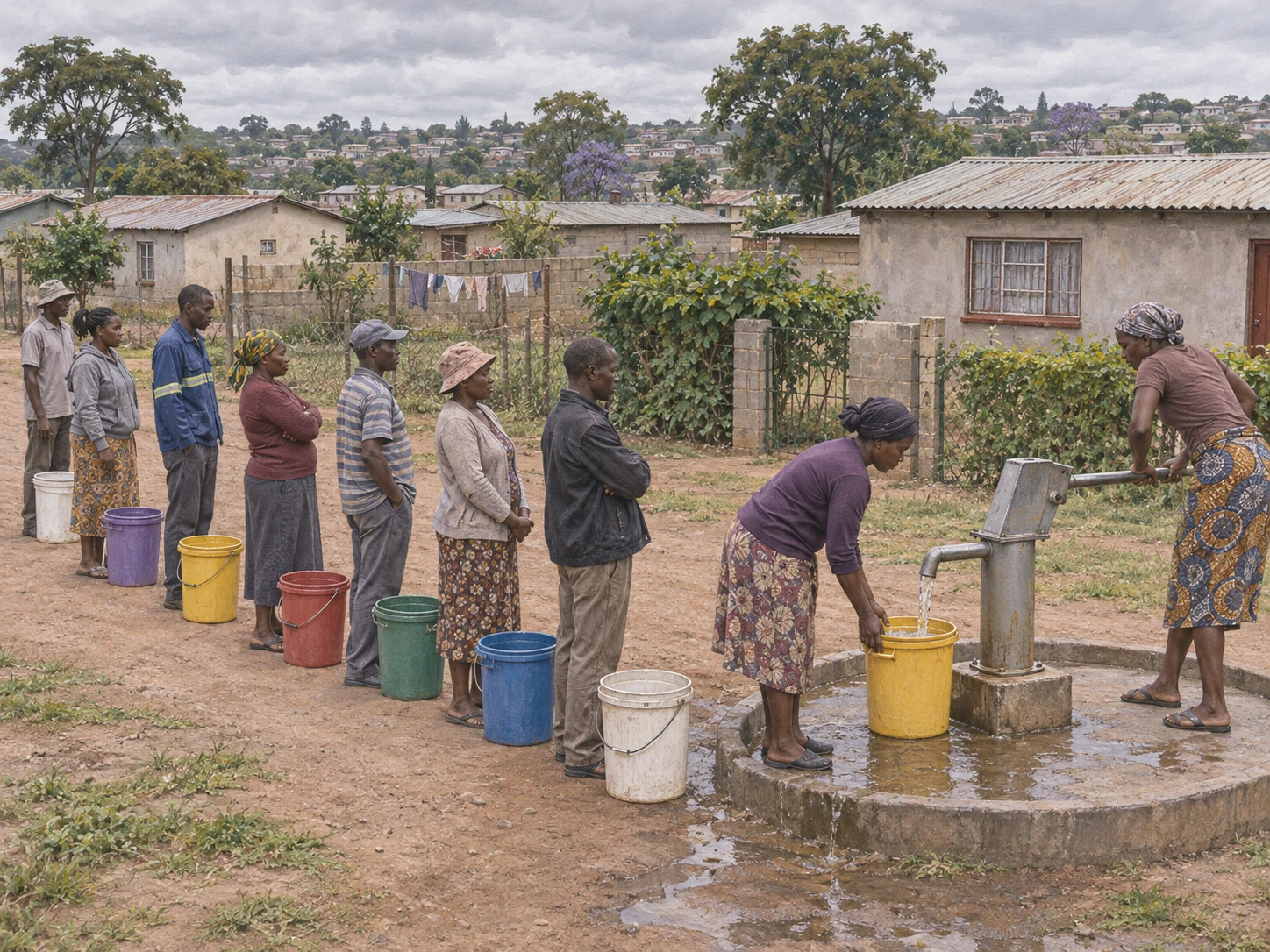
In Livingstone, southern Zambia, communal hand pumps have served as essential points for obtaining safe water. A Livingstone City Council record explains that after a new water project was completed, residents no longer had to queue at hand pumps. That official statement directly establishes the earlier practice: people came to the same water point with containers and waited in a physical line for their turn.
The object of the wait was not a service counter but a pump that could serve one user at a time. Each household needed containers for drinking and domestic use, and one person’s collection had to finish before the next could begin. The capacity of the water point therefore shaped how residents spent part of their day.
The inherited candidate suggested that unattended buckets themselves might preserve a person’s place. No direct source for that narrower custom has been found, so this article does not repeat it. What the evidence supports is the physical queue at Livingstone hand pumps and the fact that improved supply removed the need for that ordered wait.