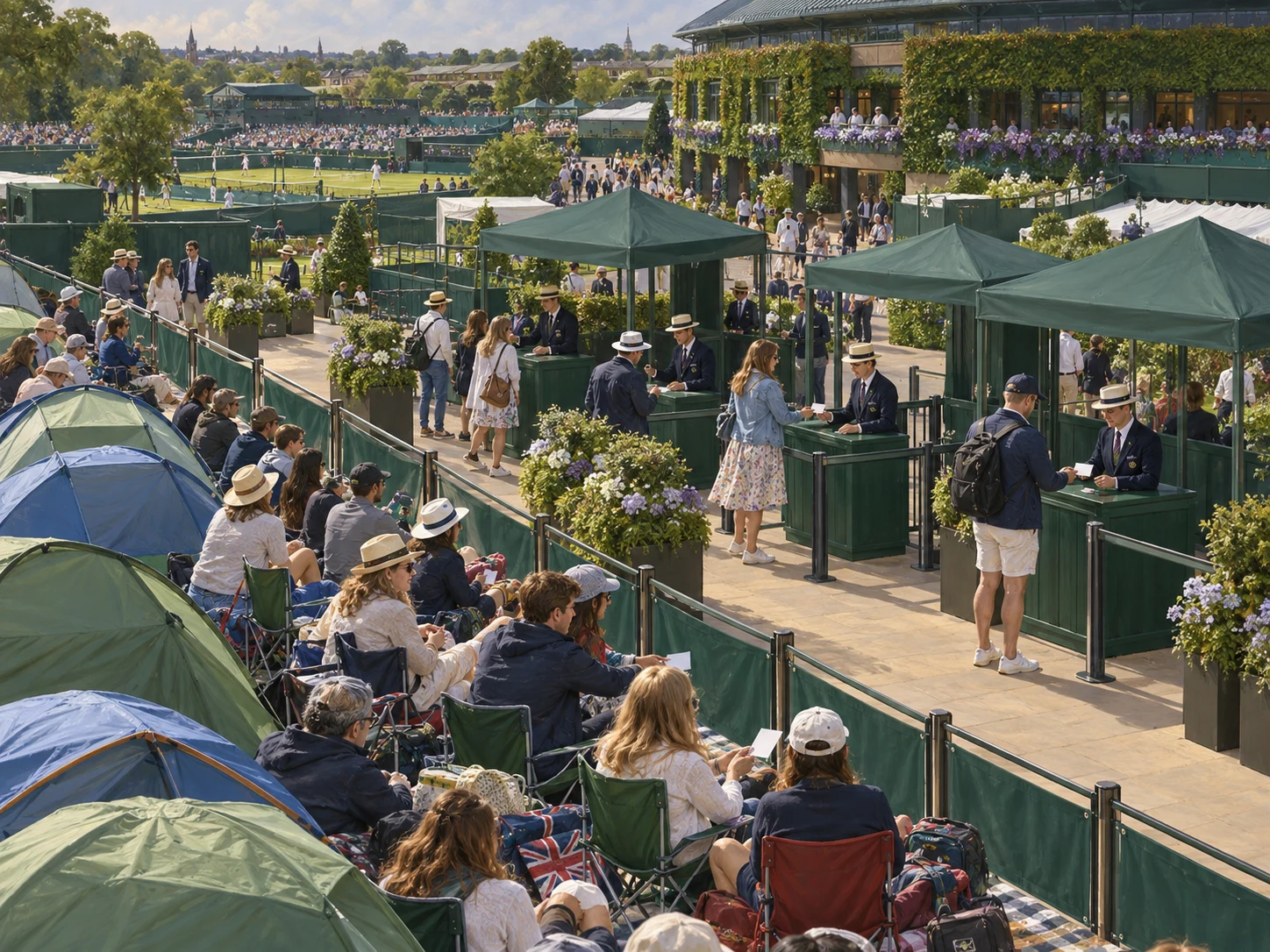
One distinctive object is the Queue Card, issued to mark a person's position. It is more than a souvenir. It helps turn a crowd of hopeful spectators into an ordered sequence, with rules about how places are managed. A small piece of card makes an otherwise invisible claim—who came before whom—something that can be checked.
Wimbledon formalises its same-day ticket queue with numbered cards and published camping rules. An overnight wait that most events try to eliminate has been absorbed into tournament tradition, beginning the spectator experience a day early.
Wimbledon has a celebrated event before a single ball is struck: the Queue. Spectators seeking admission line up under procedures explained in the tournament's official guidance. Waiting is not merely an obstacle on the way to the tennis. For some visitors, it becomes part of the experience of attending.
Calling this a tradition should not erase its costs. Weather, mobility, transport and the ability to spare time all shape who can participate. Some people enjoy the anticipation; others cannot afford the same hours. Inside the grounds, the score records every point. Outside, a card quietly records a different contest: the order in which people arrived before the day of tennis began.
Wimbledon's own guidance treats 'The Queue' as a proper name. Spectators enter a system of queue cards, camping and limited day tickets rather than merely standing outside a ticket window.