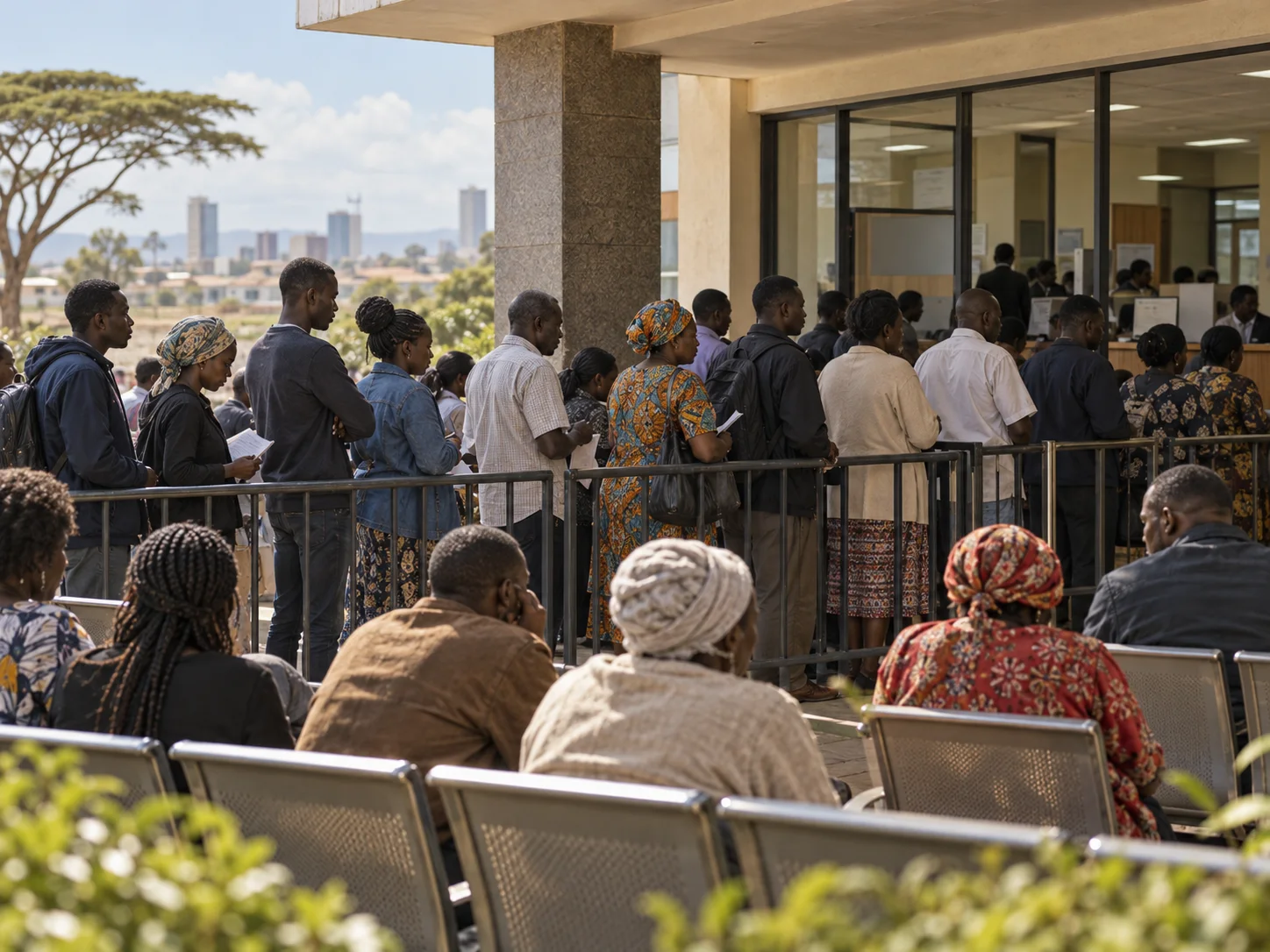
In July 2024, hundreds of young people seeking national identity cards gathered in lines at a Huduma Centre in Kisii, western Kenya. Yet the High Court had temporarily halted the issuance of cards under the new Maisha Namba system. Applications could still reach a service counter while the printing stage beyond it was blocked, and the queues were expected to grow.
A national ID is more than a card. It is a key to employment, finance and many government services. The previous month, the government had promised to clear a backlog of about 400,000 applications within thirty days and had moved printing to a twenty-four-hour schedule. The court order therefore connected a young person's place in line with a legal dispute over the national identification system.
What makes this queue distinctive is that it cannot be explained only by the speed of the counter. Even after an application reaches the front, waiting continues if the nationwide system that produces the card has stopped. The visible line and the invisible backlog occupied the same process.