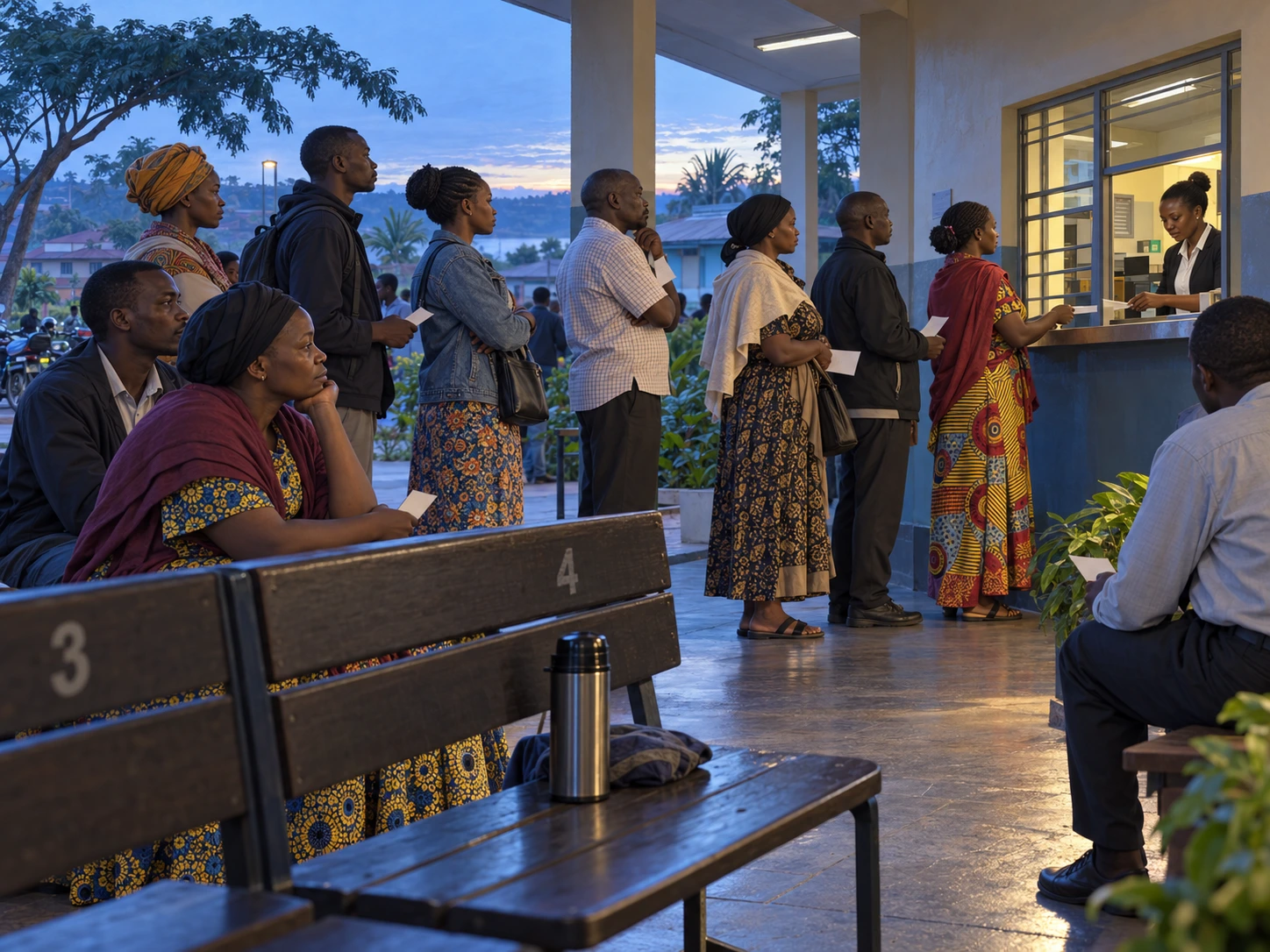
Uganda began a nationwide drive to renew and issue national identity cards on 27 May 2025. Residents gathered before the scheduled 8 a.m. opening at several Kampala venues, and long lines had already formed in Rubaga by that hour. In Makindye, hundreds were waiting before the registration teams arrived. These were physical, ordered service lines at registration sites, not merely people caught in an administrative backlog.
A national ID is tied to everyday access: public services, employment, finance, and school registration for children. Because the campaign handled both renewals and first registrations, the capacity of biometric machines and staff directly determined how quickly the line moved. Reports of people arriving early and still waiting late in the morning show how a digital identity system can continue to depend on bodies taking turns for in-person biometric capture.
Local reporting also recorded anger over allegations that money or personal connections allowed some people to jump the queue. The line therefore became a visible test of fairness as well as capacity. The inherited 2024 date described the delayed preparation period; the candidate has been corrected to 27 May 2025, when the same national-ID purpose, in the same country, was directly documented as a physical queue.