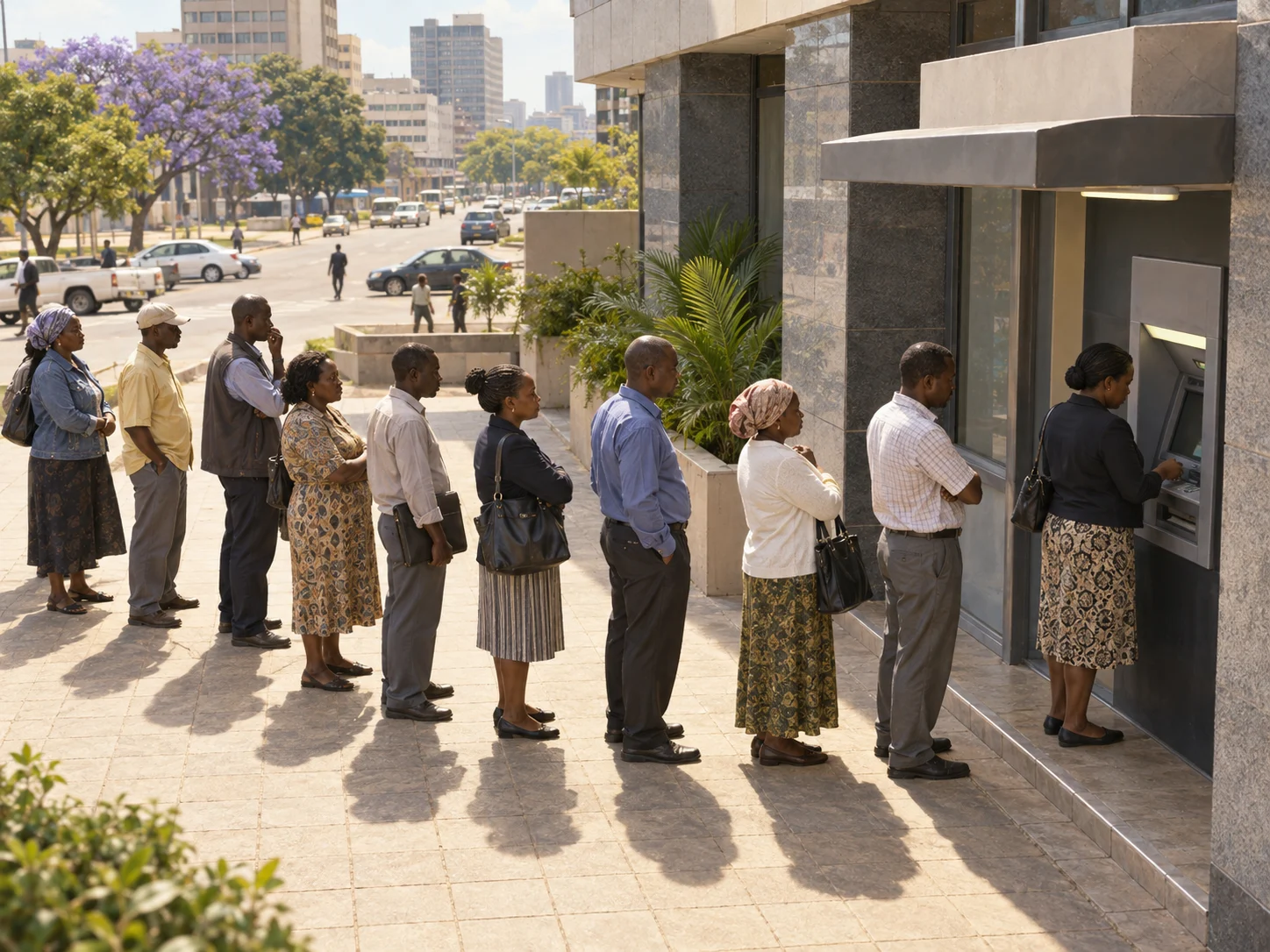
On 1 April 2008, Reuters photographed Zimbabweans waiting at a cash machine in Harare to turn bank balances into usable notes. The date and location matter because the queue belonged to a fast-changing monetary crisis. The central bank repeatedly introduced higher-denomination notes, yet the shortage of physical cash persisted. Reuters reporting in January said new notes had failed to clear long bank queues, while the central bank blamed commercial banks for not collecting enough currency. By December, the permitted withdrawal was reportedly raised from the equivalent of only 18 pence a day to about £33 a week.
Under hyperinflation, the number of zeros on a note could grow faster than cash machines and branches could be supplied. A positive account balance therefore did not guarantee the ability to buy food or pay transport. If a withdrawal ceiling lagged behind prices, even reaching the front could leave a customer without enough cash for the week. This was not a line for a giveaway. People were trying to recover value they already considered their own, through a system that rationed access to its physical form. In Harare, the breakdown of monetary circulation became visible not only in economic statistics but in a queue extending from an ATM into the street.