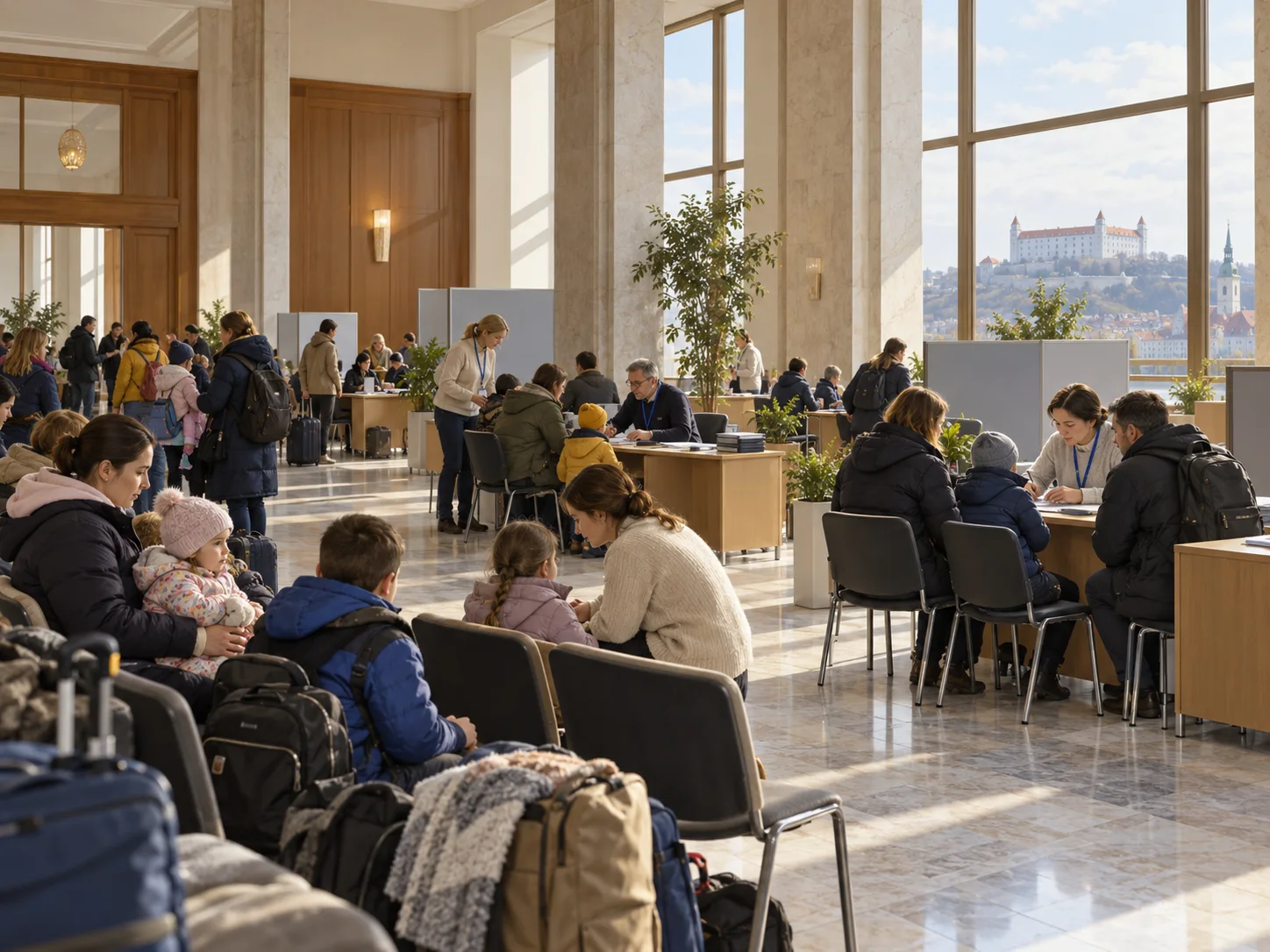
In 2022, registration for temporary protection became an entry point to legal stability, health care and social protection for people who had fled Ukraine to Slovakia. In UNHCR research, 61 per cent of respondents in Slovakia who had applied for temporary protection identified a long queue as an application challenge. By 2 May, nearly 73,200 people had applied.
Those waiting were not tourists or routine visitors to a government office. They had escaped a war, and many were women, children or older people. Registration centres checked identity and eligibility, turning protection into an administrative record. Temporary protection was designed as a faster alternative to the ordinary asylum procedure, but a faster legal route did not necessarily mean a short wait.
The queue shows that displacement does not end at the border. Even after reaching safety, people may still have to wait their turn to enter a system of rights. An invisible legal status acquired a visible human form outside a registration desk.