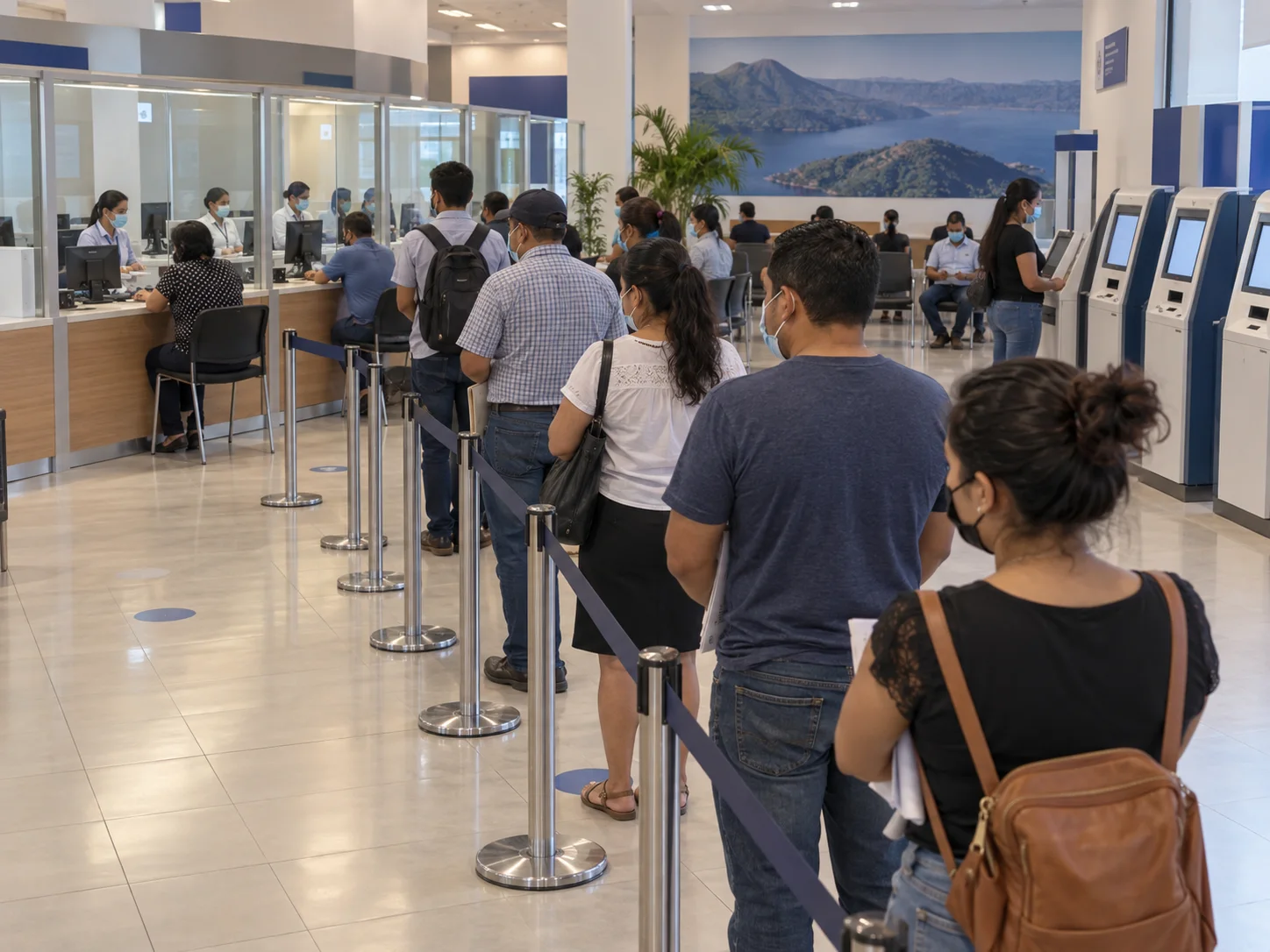
Many early Chivo users wanted not to hold bitcoin but to turn the thirty-dollar incentive into cash.
The government offered new registrants the equivalent of thirty U.S. dollars in bitcoin. That was an incentive to experiment, but it could also become certain cash if withdrawn. App failures, identity checks and unfamiliar controls pushed transactions that appeared instant on a screen back into the slower world of staffed booths and machines.
Identity checks, connectivity and the number of machines limited the supposedly digital speed.
When El Salvador made bitcoin legal tender in September 2021, the government launched its Chivo wallet and a network of dedicated cash machines. A digital currency immediately produced physical queues. Time reported long lines at Chivo ATMs, where many users were converting bitcoin into dollars.
Cryptocurrency is often described as independent of borders and opening hours. Early Chivo users still depended on the number of terminals, available assistance and working communications. They waited in an old-fashioned order to enter a promised monetary future. The contrast was not merely ironic. It showed that even a digital system has a physical threshold, and that someone must spend time crossing it.
The currency of the future became real at a machine dispensing old-fashioned dollars.
Quality check: TIME’s 2021 reporting documents users waiting at Chivo ATMs to convert bitcoin into dollars and explains the rollout that produced the queue.