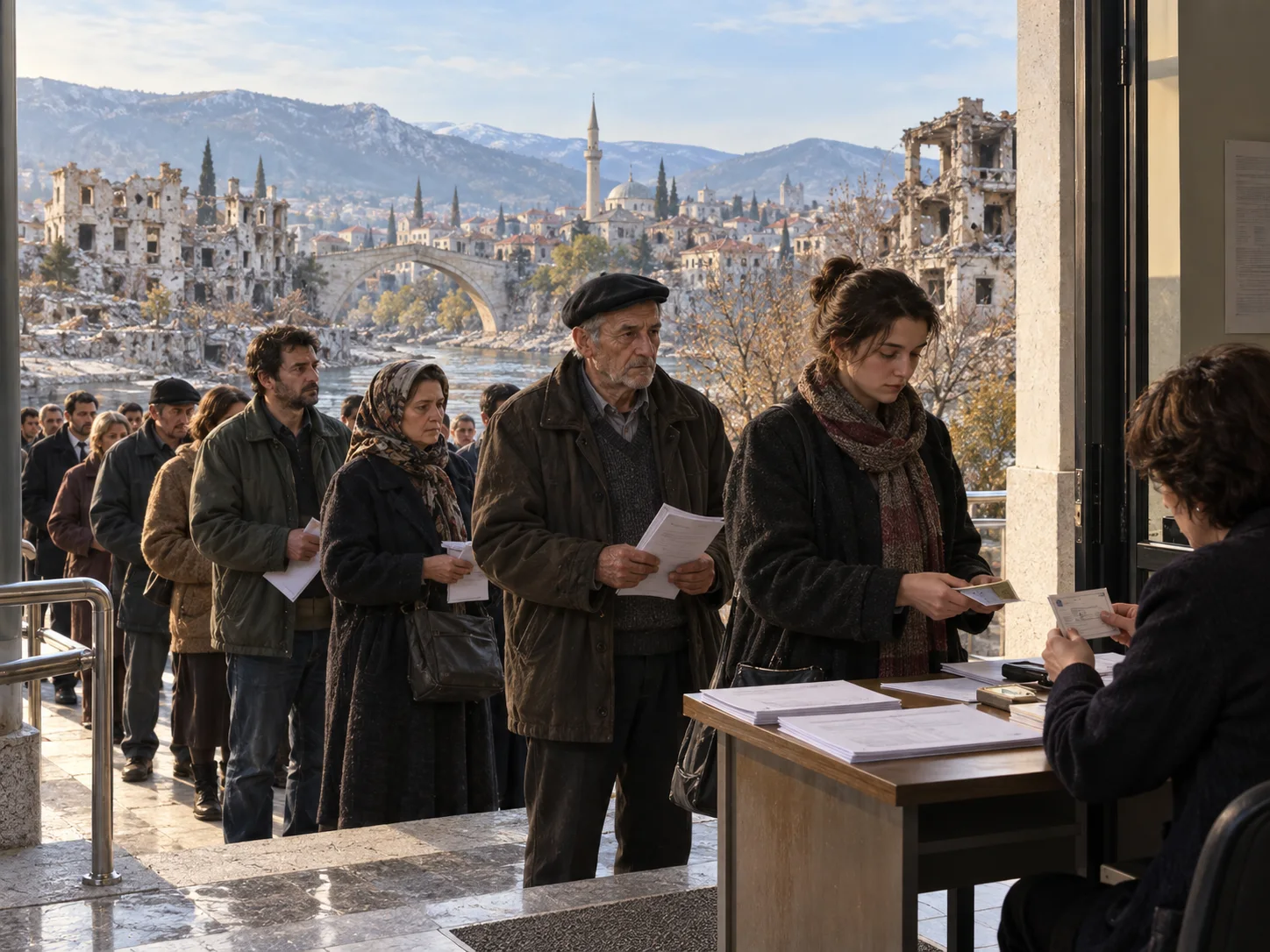
After the war, Bosnia and Herzegovina introduced CIPS, the Citizen Identification Protection System, creating a common national identity card and central registers. In 2024, citizens at CIPS counters in Sarajevo waited for hours for identity cards and residence records. Local reporting described continued congestion even where ticket machines were meant to organise service at the counters.
CIPS remains part of everyday language, referring both to the identity-document system and to the offices that handle its records. An identity card is basic proof for banking, employment and public administration. People in the same line may appear to want the same document, but each needs it for a different part of life.
The queue reveals the gap between a unified system and the capacity of local counters. A country can standardise its documents and databases, yet applications and collections still move one case at a time. National integration may be completed in the register; its final delivery to citizens still has an order.