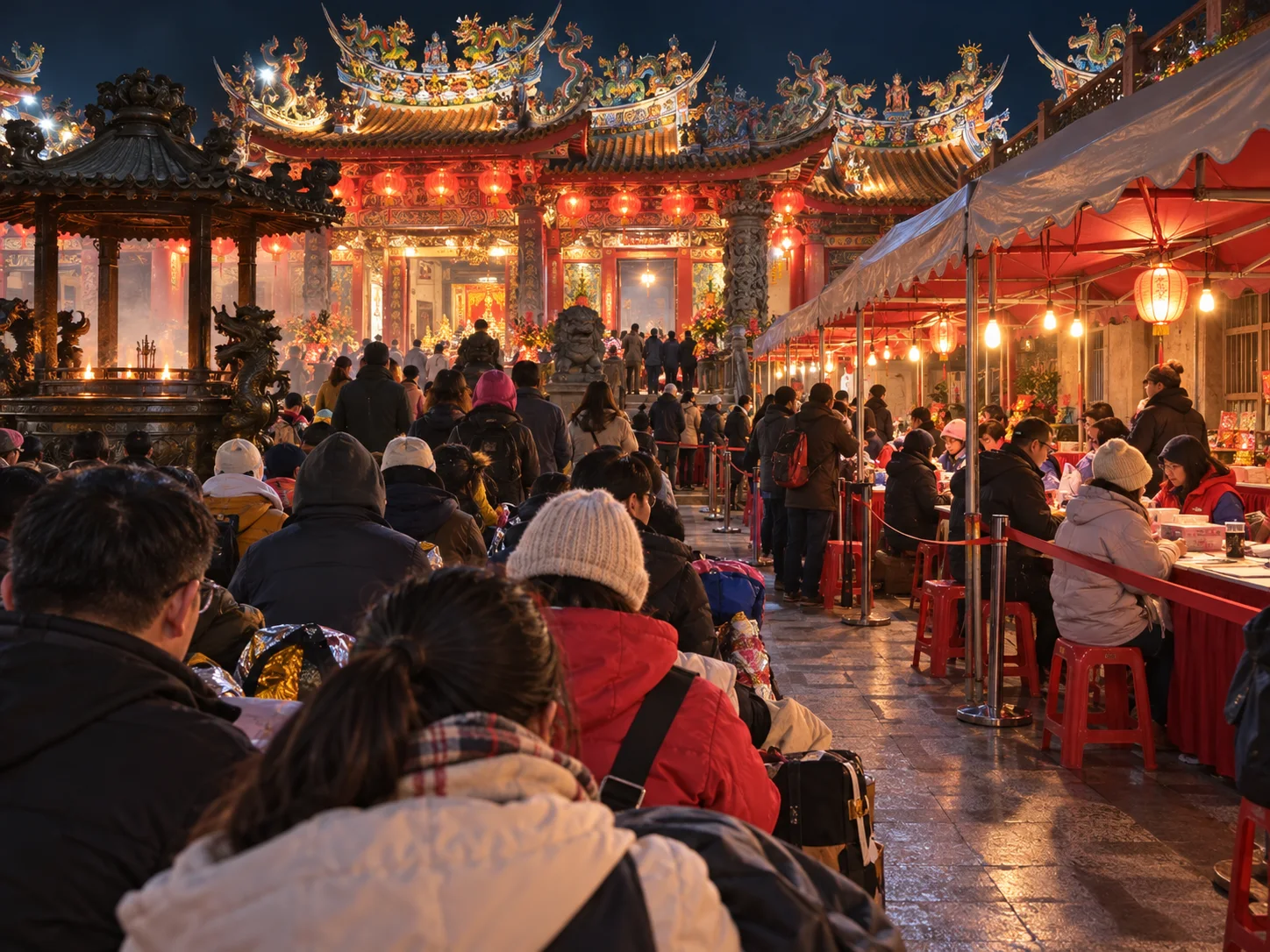
At Baishatun, staying overnight secured entry to a draw, not a prayer place.
A first-come system would favour those most able to arrive early. A remote lottery would remove the act of presenting oneself at the temple. By combining an in-person registration line with a draw, the organisers placed both arrival and chance inside the procedure.
Combining arrival with chance prevented early comers from claiming every slot.
In December 2025, people began gathering overnight at Baishatun Gongtian Temple in Miaoli County, Taiwan, to register for limited New Year prayer observances, including rites associated with peace and learning. Taiwan's Central News Agency reported more than a thousand registrations. Because demand exceeded the available places, participants would be chosen by lot. The end of the queue offered not the rite itself, but a number that might lead to it.
Staying overnight could not guarantee selection. People nevertheless came, waited and saw how many others carried similar hopes for family, study or the year ahead. The line distributed an equal uncertainty rather than a certain entitlement. Because time spent and outcome received were not proportional, it also reflected a larger truth about prayer: effort may express a wish without controlling what follows.
Separating effort from outcome created a distinctly religious form of fairness.
Taiwan’s Central News Agency recorded a registration crowd of roughly a thousand for a ritual at Baishatun Gongtian Temple. Arriving early could not guarantee the final result, yet everyone still had to wait through the same first administrative step toward participation.