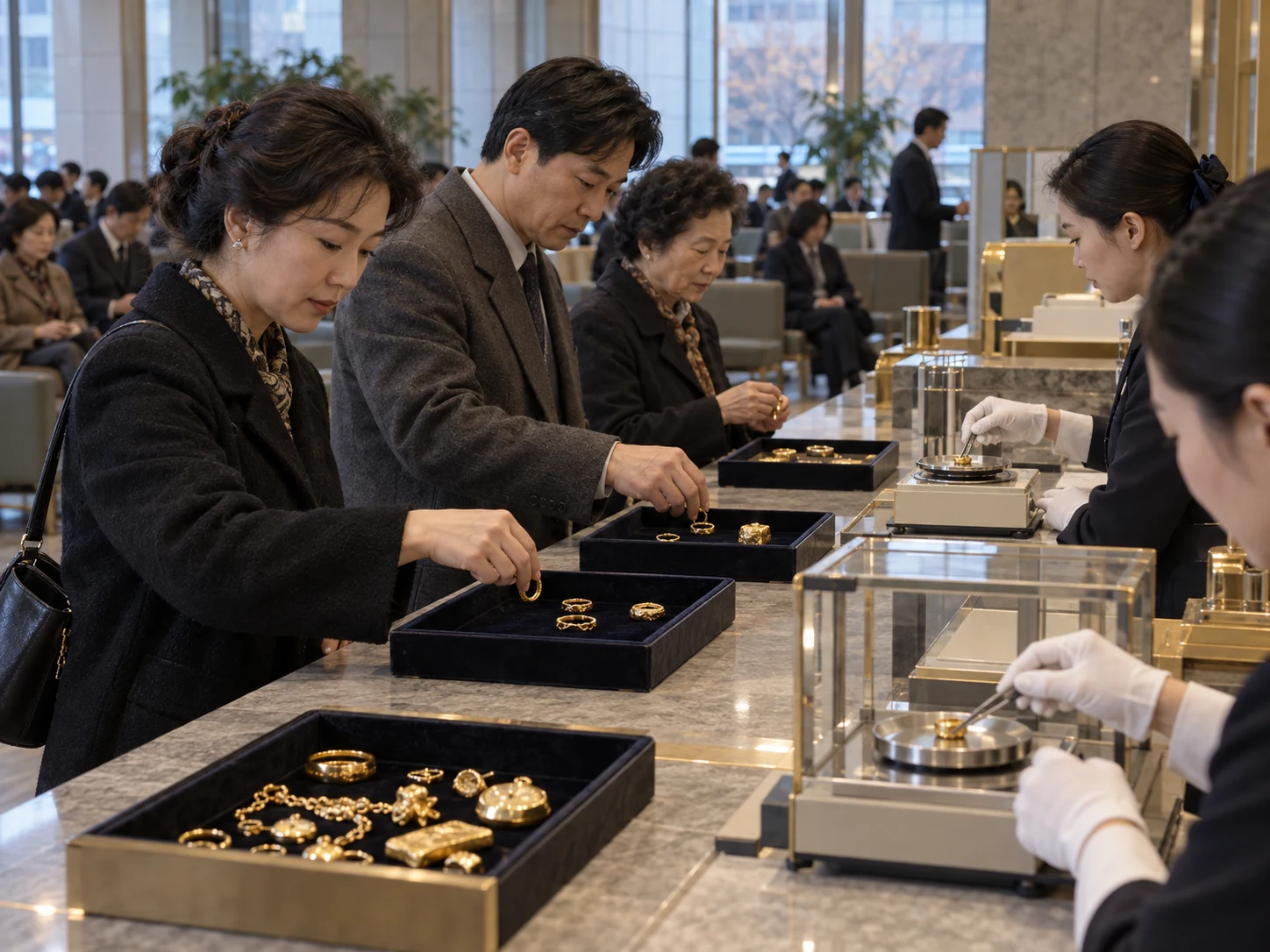
In January 1998, people queued at South Korean banks carrying rings, necklaces and commemorative medals. South Korea had accepted an emergency rescue package from the International Monetary Fund after the previous year's currency crisis, and a nationwide campaign asked citizens to contribute personal gold that could be converted into foreign exchange. Reuters reported that 45,000 people took part on Monday and 88,500 on Tuesday; within days, 17 tonnes had been collected.
What makes this queue unusual is that people were not waiting to buy something or receive assistance. They were turning value stored at home into national financial reserves. Each object had to be weighed and tested before it could join a pool of exportable gold. The bank counter became a point of contact between private jewellery and a crisis measured on the scale of a country.
It would be too simple to assign every participant the same patriotic motive. Even so, the act of waiting to surrender one item at a time made an abstract shortage of foreign currency tangible. Financial crises often produce lines of people trying to take money out of banks. In this case, the direction was reversed: people queued to bring value in.