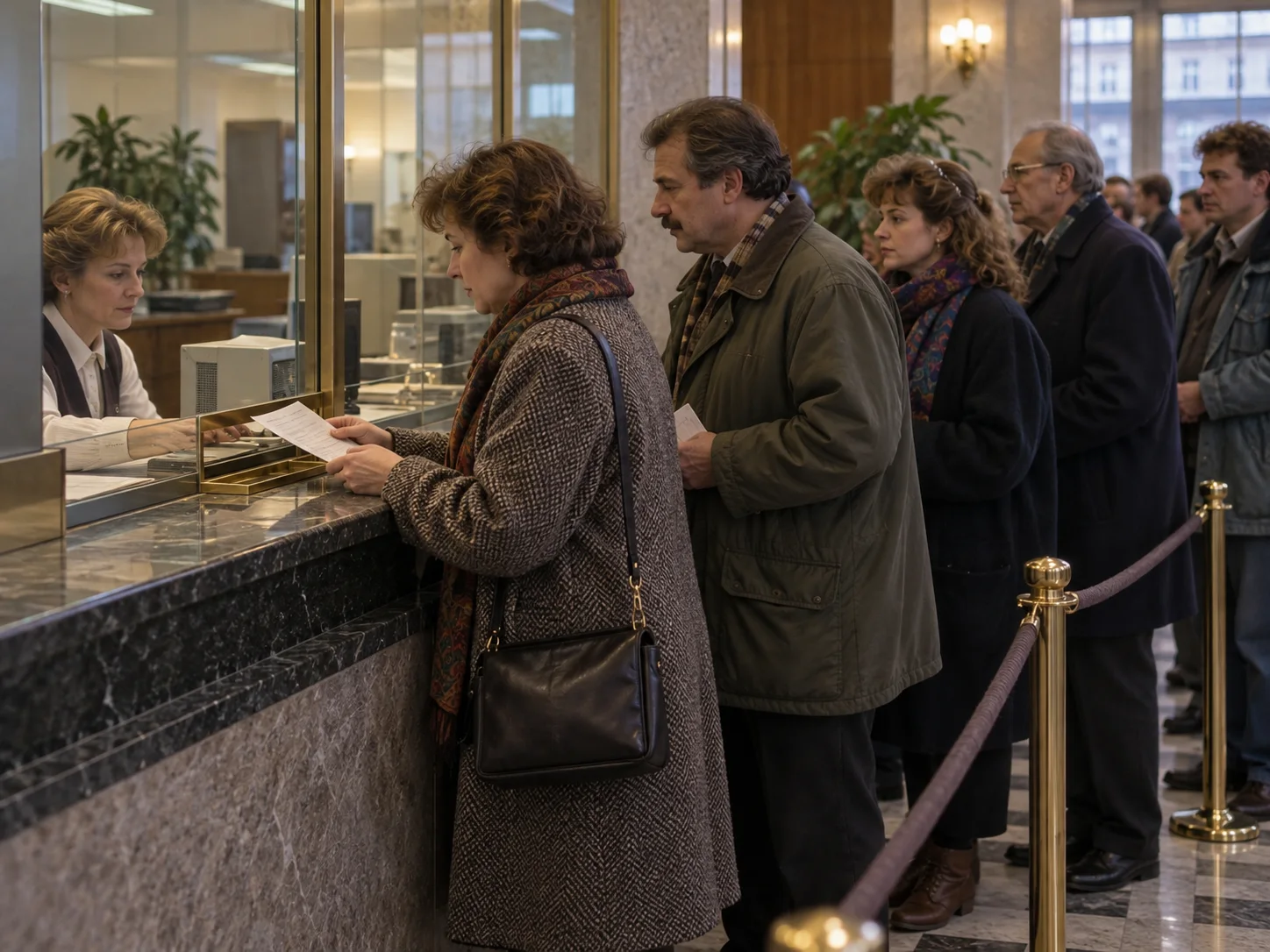
On 11 June 1990, East Berlin residents queued from early morning outside banks and savings branches to complete currency-conversion formalities. Tagesspiegel's chronicle records a line more than 200 metres long on Leipziger Strasse.
Ahead of the July introduction of the Deutsche Mark, people submitted applications to convert accounts. Cash could not simply be exchanged; some families first had to open accounts for children or spouses. Branches added staff and extended hours while urging customers not to arrive in the first days.
Currency union was not a banknote changing overnight. It was implemented as individuals completed forms and organised accounts. The 200-metre wait measured how a vast institutional change was broken into counter transactions.