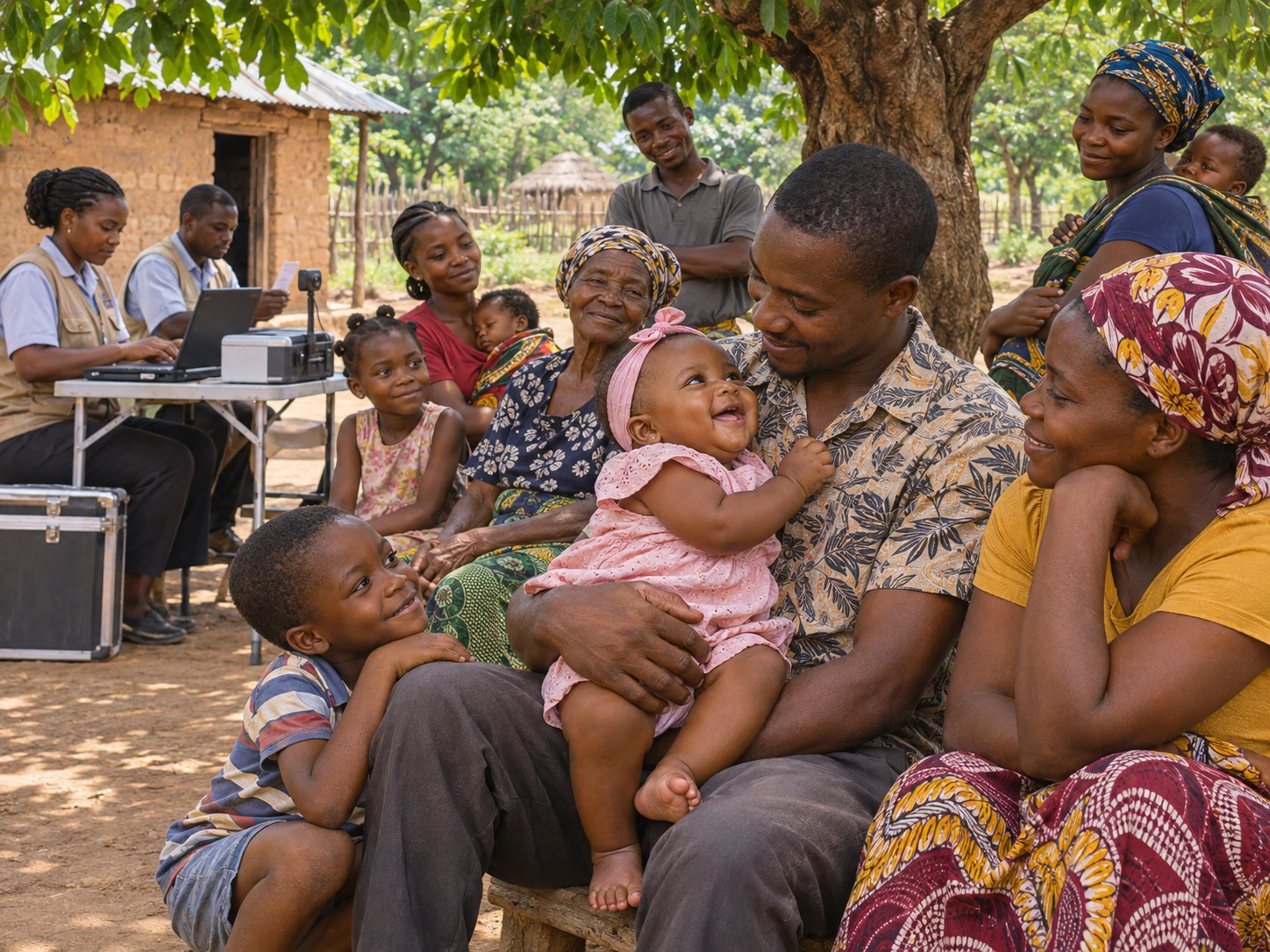
In 2026, families formed a queue for a mobile birth-registration campaign in rural Gaza Province, southern Mozambique. A report from activities in Guijá and Mabalane describes a father holding his six-month-old daughter as he waited among dozens of mothers.
Birth registration connects a child's name and existence to the public record and provides a foundation for access to rights such as education. What stood out in this queue was the father's decision to treat the procedure as his own responsibility in communities where child care is still commonly regarded as women's work. By bringing registration into rural districts, the mobile service created a waiting place where a family's choice and a wider social change became visible.