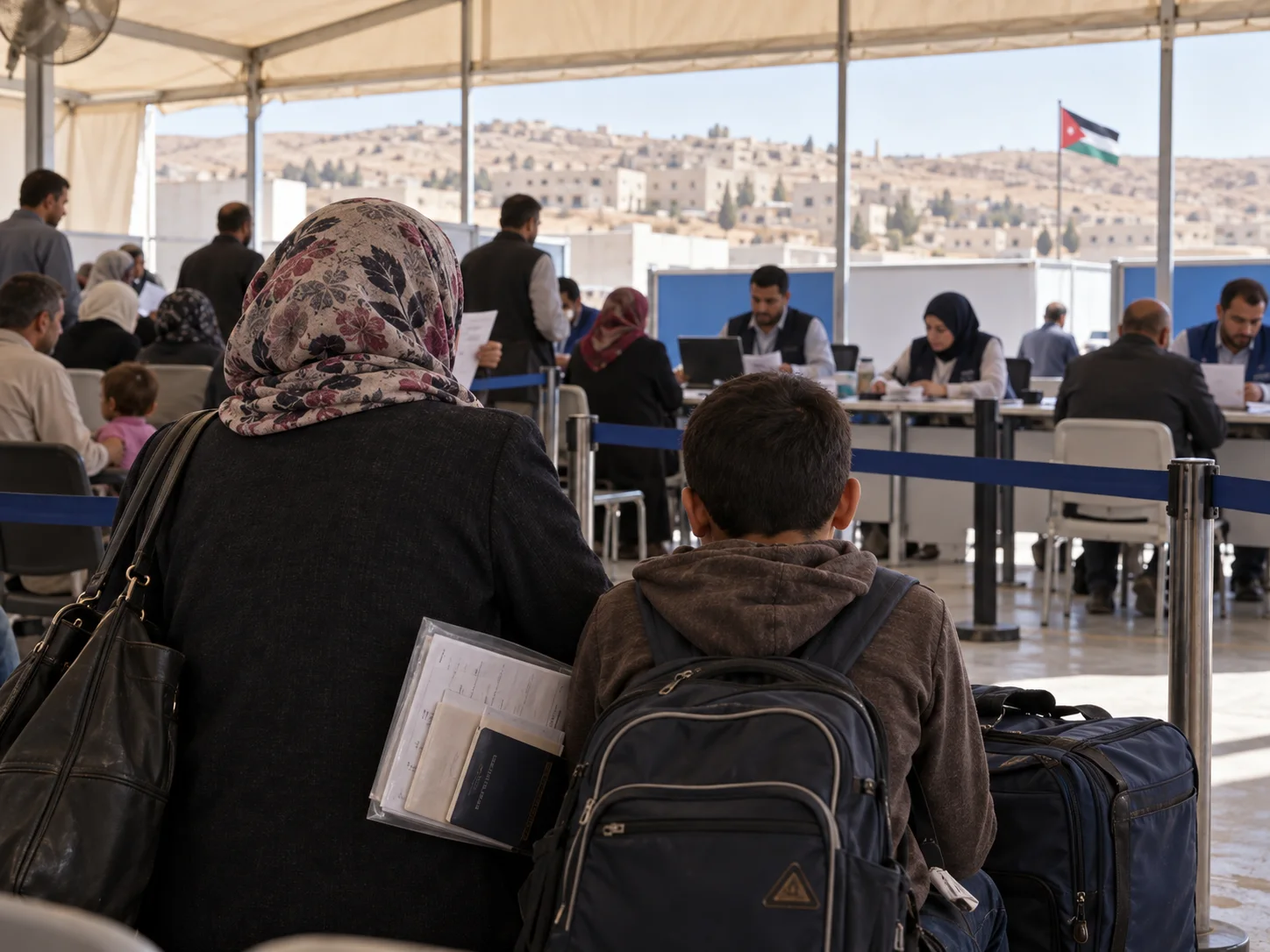
Around 2012, Syrian refugees approaching UNHCR's urban registration centres in Jordan could wait up to twelve months for an appointment. More than 60,000 were still awaiting registration in July 2013, but additional staff, expanded facilities and iris scanning allowed the Irbid centre to clear its backlog by September.
Registration was not merely an identity check; it was the entrance to protection and assistance. Capacity for 1,300 people a day reorganised a visible counter queue into a managed appointment and data system. What shrank was not only waiting time, but the uncertain period spent living without registration.